
by Dena Pruett
The Adults are Talking
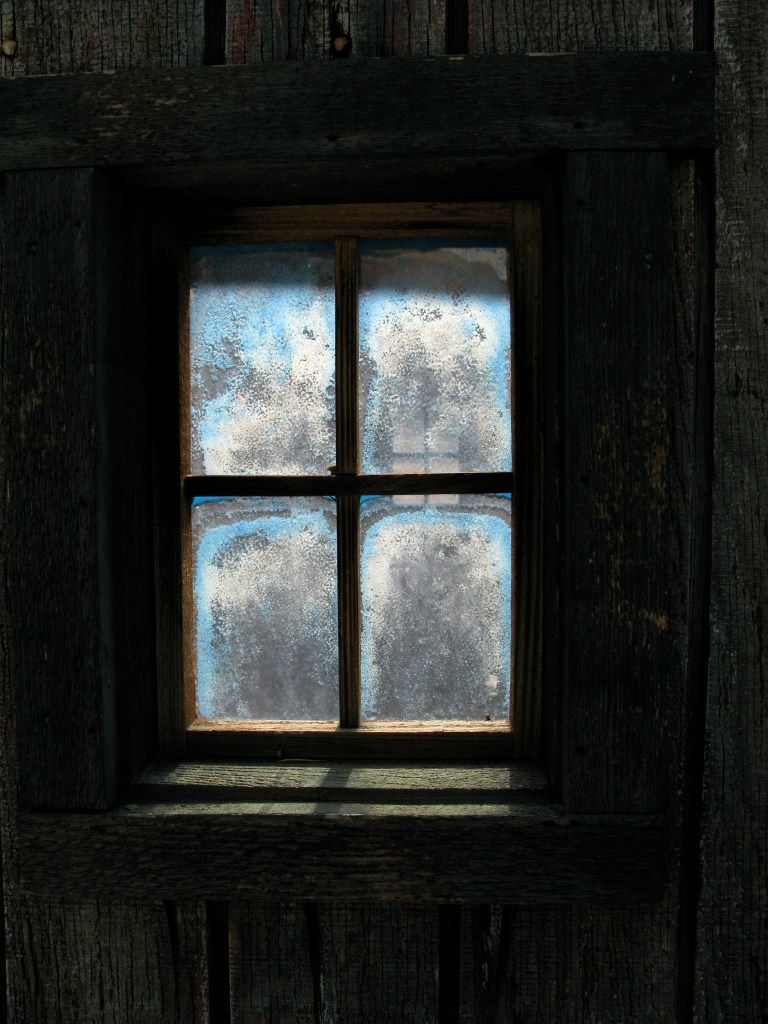
She came to room 6303 first, ignoring the light, taking off her jacket then shirt followed by pants and socks. Each item snapped outward to remove even the hint of a wrinkle and folded flat in a neat pile on the only chair, a shabby affair with loose threads in striped maroon and mustard. She placed her scarf over the mirror. Like most hotels, the room gave off an abandoned men’s lounge vibe with red-toned woods and stark white bed linens that appeared fluffed and inviting if not new. Tasks completed, she stood in the center of the room in her sheer lacy bra and underwear, the only matched set she owned. In earlier years she might have moved to the bed and tried out different poses unsure of what to expect, unsure of what he was expecting. Instead, she walked over to the window and inched the curtain open to stare down at the mid-day traffic, which is where he found her when he came in. The gauzy liner blurred and softened the rigidness of her back.
“Hey,” he said. He tossed his coat over the desk. Four times ago, his lips had shaped and formed first the consonants then the vowels of her name in an overly familiar, much too intimate way that startled her. Instead of yelling, she gave an almost imperceptible shake of her head. He had not said it since.
“Hey,” she replied, turning. She left the window, taking small steps until she stood in front of him, her forehead grazing the stubble of his jaw. Rather than look up into his face, she unbuttoned his shirt, tugging at the sleeves. She folded it up and placed it next to her own. Then, she unzipped his pants. These she left crumpled on the floor. She stepped back. He stood in nondescript black boxer briefs though she could tell he had bought them in bulk from one of those warehouse clubs.
He placed a hand under her chin, tilting it up. From the dim light of the window, she could make out the broad strokes of his features but not the details. It was all by design and necessity. He laid her on the bed and followed her down. She waited for his next move and tried not to give a moan of relief or thanks as he drew her to him, curving around her, his chest to her back, his arm a pillow for her head. He inhaled the perfume of her hair, a mix of blackberry and spice, and she burrowed into the salty sweat of his armpit. He held her loose and soft like a moth caught in the hand.
“Did you want to –” he started to speak.
She kissed the inside of his wrist and he fell silent. They laid like that listening to the other’s breath. An hour passed. More. They watched the shadow of the sun move lower behind the curtain until it diffused the room in a warm gold. The change in light roused her enough that she started to move away.
He rolled her over and braced himself above, dipping his head close. Whatever he was looking for he must not have found. The tendons in his arms bunched then released as if he wasn’t sure if he should stay or go. Sensing his indecision, she scrambled for purchase atop him, flipping them both, throwing her arms around his neck, laying him flat and stretching out across him so he couldn’t move. Whereas his touch was delicate, hers was fierce. It would never be enough.
She couldn’t find the way to tell him, make him understand that she wanted so much. To crack open his chest. Crawl down below the safe warmth of his organs and pull his ribcage up and over her. To seal herself inside. For him to carry them both. She pressed her face into his neck instead and started to cry hot tears that spiraled out into more. She shook in his arms. He shuddered in return. They held on until they couldn’t, and their grip loosened. They moved to opposite sides of the bed, sitting up and away from each other.
“I didn’t think you’d come this time,” she said, fisting her hands into the side of the bed.
“Of course, I’d come,” he replied. He turned to her slightly, but she didn’t do the same, so he went back to facing the wall. “I wouldn’t miss today.”
She didn’t respond but he could hear the “yeah, but” hitched in her throat that he chose to ignore in his own. There were other ways than this. When they first started these meetings, these visits, hell, he didn’t know what to call them, it had been a recommendation from a therapist. Here in a room that was not their own maybe they would be able to speak in hushed tones of things they couldn’t when still among the portraits of their family that no longer was. Instead, they talked about the before and after never the during as if they had entered a coma together for six years. Every year, once a year, they came. And every year he waited for her to talk. And maybe because she was scared that he came today but wouldn’t again, she finally spoke.
“I read this article,” she said now, “about how there is no such word for what we are. There are widowers and orphans. But we’re just parents.”
“Please,” he said. “Please.”
She bowed her head. “You know the facts of it.”
The seasons of their family were football, basketball, and soccer. In between, they camped and hiked. They took pride in being a sporty, outdoor family. The Logans did not loaf about in front of the television. The two of them had met outside in the quad freshman year. He was laid out on a blanket strumming a guitar and she was hurrying past on her way to ROTC. He offered her some line about slowing down and good conversation. She shut him down for the cliché he was. But on her return trip to her dorm, he tried again. This time, she gave him a chance though why she couldn’t say. Their first date was a hike. They talked of their parents, food allergies, and dreams for the future as they wandered among the boulders. And they never stopped talking all those years through fights and moves and bills until the one thing that could end the conversation, did.
“Tell me,” he said.
“You and August were asleep. Between your snoring and the rain, I couldn’t sleep. It was muggy, sticky. It had started to thunder. I was already awake when Jack told me he had to use the bathroom. We walked maybe ten, fifteen feet from the tent under an umbrella. I didn’t think the ground was any wetter from earlier in the day. It sounded like a train. That’s what Jack asked. Are we near a train? No, I said. And then there was a rush of water. I grabbed him and held on. It took us. And all I could do was hold on. And I thought you and August were gone but I had Jack. I had Jack.”
He had turned fully to look at her, his hand reaching across the bed, but she stayed facing the wall. Her shoulders were like a collapsing accordion folding slowly inward.
“August and I got swept away in the tent,” he said. “But we got out. We found a tree and held on.”
“We did, too,” she said.
“Eventually we were able to climb.”
“We couldn’t. There weren’t any limbs. He didn’t really speak. Just whimpers. And I couldn’t shut up. I couldn’t stop. I love you so much. Daddy loves you so much. August loves you. You are the best big brother. Hold on. Hold on. Just a little bit longer, baby.”
“I didn’t know that.”
“And the water keeps slamming us back against the tree, tugging us down. It’s so dark. It feels like an eternity.”
“Four hours.”
“Four hours. But I’ve got this. I’m a soldier. You’re an accountant. But I’m trained. I know this.” She stops. She wants him to know that all the snideness and derision is hers alone.
“You lose your grip on him.”
She sucks in a gasp but then steadies. “A second. A split second. An instant.” She looks down at her empty hands.
“And then you fall away from the tree, too.”
“Yes.” She lets go of the tree. She is weak in that moment, so weak, not thinking of him or August. She watches Jack’s head disappear beneath the murky black of the water. And she tries to swim but he is gone and so is she. She lets it take her. Pleads with it to take her. She can’t breathe. She takes in more and more water. Only, she washes up on shore. She throws up the water. Paramedics come and take her to a hospital. They patch up her broken ribs and arm. What treacherous god would do that? What lesson is to be learned?
“It wasn’t your fault,” he said. He always said that. It wasn’t your fault. It wasn’t my fault or anyone’s, ready to absolve and forgive them both. That at the time Jack was six and at three years old August had been much easier and lighter to hold on to. That the park should have put up more warnings. But she could shoot it all down. Pinpoint every instance, every minute detail that revealed them to be failed parents and protectors.
He didn’t want to punish her, he said. He would want her to do the same if it had been him. Forgive him. Why then, she could never ask, do you always pick room number 6303 which was Jack’s birthday? If not to punish?
He reached out to trace a line down her back. She was sad and soft, and it was all so delicate this time in the room with her. He thought, like her, that he would end these visits. He remarried a year ago to a woman who was also soft but not so sad. A woman who held him and made him laugh but it was never quite right or comfortable. He told himself that someone had to play pretend if not for him then August. And if it sometimes veered into something that felt real, well it couldn’t really be a betrayal after all these years even if it felt like it was.
She stood up to escape the rush of tenderness she felt down her back by pulling the scarf away from the mirror. In the shadowed mirror, the lines at the corners of her mouth and the top of her forehead were etched in stone. She tried not to tally up the visits which were equal to the number of years Jack had been gone but she couldn’t stop. They were in their fifties now. Bellies softening, knees cracking. Jack would have been 18. August was 15.
They were at the point now where the conversation turned to what ifs and maybes as it tended to do. Maybe if they had camped on higher ground. Maybe if they had been more dedicated to swim lessons. Maybe if it had been him rather than her, she could have forgiven him when she couldn’t forgive herself. And some maybes that they couldn’t speak aloud like maybe if it had been their younger son, they could have closed ranks and pretended that it had always been just the three of them and there wasn’t a gaping hole in time. Instead, they could never untangle the pieces of Jack from their family. And still they asked and puzzled and examined. As if they could finally solve this. Figure out the answer. The why.
If he could, Jack might have told them they were asking the wrong question. That he was the one who was tired, that he was the one who let go. If things had been reversed, his dead mother would have been a sad footnote in a large life with many more chapters. August, who was sprawled out in a friend’s basement smoking weed and playing video games and didn’t remember any of this anyway, might say something along the very same lines. Not everything is a lesson. Sometimes the world is fucked. But they wouldn’t hear their sons anyway. Not now. Not here in this room. And if they did, they would just tell them shush. Shush now. The adults are talking.
Like they used to in the time before when they had already tucked Jack and August into their beds, all snug. And still, they would hear the drumming of little feet race overhead across the floorboards to the stair landing. There the boys would lay, their dark heads pressed together between the banisters, whispering of what only they could know. Their dad would have on that record – the one he called ours – and swing their mom into his arms, kiss her. And then dip her down so low over his arm so low it would look like he was about to just almost lose her.
Author Dena Pruett (she/her) lives and writes in Birmingham, AL. She received her MFA from the Mississippi University for Women. Her work has appeared in New Ohio Review, storySouth, and After Dinner Conversation.
Artist Roger Camp (he/him) is the author of three photography books including the award winning Butterflies in Flight, Thames & Hudson, 2002. His documentary photography has been awarded the prestigious Leica Medal of Excellence and published in The New England Review, New York Quarterly and Orion Magazine. He is represented by the Robin Rice Gallery, New York.
 Gulf Stream Magazine