
by Elizabeth Spano
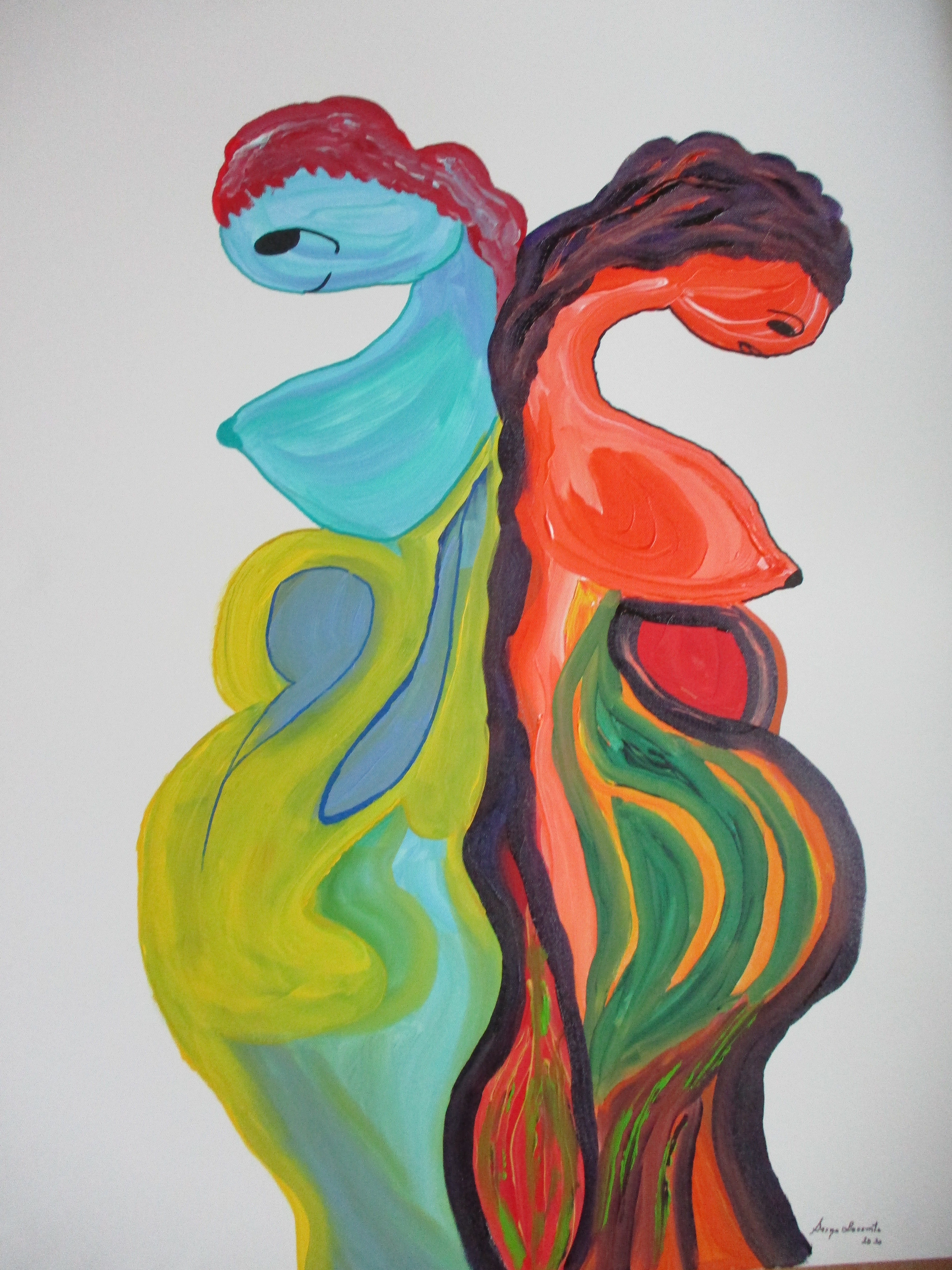
Baby Blue
You hold the newborn baby, and you think, don’t drop the baby, don’t drop the baby. You fear you’ll temporarily lose your mind and drop the baby on purpose. You test your grip and reassure yourself that you are sane, that you are fully capable of supporting this baby in an ongoing way. Human beings, many of them idiots, have been holding babies for centuries.
You force your attention back to the conversation you are having with your friends, this baby’s parents. They see you holding their child and they appear confident in your ability. They trust you with this fragile life – you, with absolutely nil experience in this area, have been handed the job without so much as an interview. They are new to this too, the baby in your arms being their first. You are carrying their most treasured possession in all the world, one they likely love more than each other, you’d guess, based on what people say about their children. Based on the way they’re looking at the baby now.
Given these high stakes, you wonder if it is in fact their faculties at question here. Who spends nine months growing a new being, endures excruciating pain bringing it into the world, upends their entire lifestyle and future, not to mention the thousands of dollars, hours of sleep and general peace of mind sacrificed in this first fledging month, to then hand over the thing to anyone who walks off the street with no qualifications aside from having two arms?
You want to tell them you sanitized your hands after riding the subway. That you didn’t touch the pole anyway.
You have not yet dropped the baby. As a small reward, you try out a gentle rocking motion. You bounce from side to side, taking care to keep the rhythm consistent. If there’s one thing you know about babies, it’s that they must not be shaken. You would equate your motion now to that of a boat bobbing on a quiet lake, which you hope might lull the baby to sleep in your arms. This would be, in your estimation, a mighty achievement in the eyes of his rather haggard looking parents. And sure enough, a few minutes later, his mother whispers the announcement: He’s asleep!
Beaming, you take their word for it. You cannot confirm for yourself, as he’s lying prone in your arms. This was a holding position unfamiliar to you, a suggestion from the mother when he’d started to cry before. You’d hesitated, having only seen babies cradled in the traditional way to this point. But the mother took him from you, flipped him to face the floor and handed him back. Thus, he was draped over you, head resting on the inside crook of your elbow, hands curled beneath, tiny feet dangling. A good position for gassy babies, his mother explained. You trust her on this too, being no more knowledgeable in the matter than the baby itself.
The baby sleeps and you begin to relax. Are you actually good at this? Maybe Mother Nature herself is kicking in, your programming finally being put to good use. Your body has been ready for this all along, a mode waiting to be switched on, maternal instincts taking over. Perhaps you do want children one day. Your friend, this baby’s mother, grew and birthed this child in the same time it took for you to schedule a dental cleaning. In the same amount of time since the two of you last had brunch together. Your biological clock may be in the final countdown, but much can be accomplished in less than a year. Assuming you find someone to do it with you. You remember this baby’s father coaches a semi-pro soccer league. These groups are typically rife with straight men. You wonder why he’s never set you up with one of them, and you’re just about to ask when the mother screams.
oh my god
oh my god
she says, staring at the baby in your arms. Time slows down, and she appears frozen in place for too long. Her husband runs, like the opening credits of Baywatch, around the kitchen island.
You hear your own voice coming from somewhere behind you, saying
what
what
what
oh my god what?
You can’t see the baby’s face, can’t understand what’s making his parents react like this, can’t imagine what could be going on until the thought occurs to you: your worst fear has come true. You somehow killed this baby.
He’s blue! He’s turning blue!
Finally, the mother lunges for her child, lifts him upright from your arms, holds him out in front of her. The three of you stare at the baby and you don’t know what you’re seeing, or if you’re breathing, or if this is where your whole life takes a terrible, irreversible turn.
The baby moves.
He appears to be a normal color.
He yawns, awaking from his nap.
He is unaware that all eyes are on him. Can only see in black and white at this early age, you remember hearing, although you aren’t sure if this is true. He doesn’t know that he was, just moments ago, a different color.
His mother nuzzles him, rocks him, squeezes him. His father reaches for his hand and leans in close, kisses his forehead. They both stare at him, analyzing his face, making sure he’s not going to pull more stunts like that again. You are motionless, speechless, potentially evacuated from your own body.
The doctor said this could happen, the mother says. You’ll know when something’s wrong or they’re in a bad position if they turn blue.
She did warn us about that, the father agrees.
Really? you say, finding some small relief in this knowledge.
Yes, but it hasn’t happened before today. The father takes the baby from his mother, holds him out in front of him and smiles. He makes to give the baby back to you.
Ha, ha, that’s okay, you say, holding your hands in the air like a criminal. Once again, you are astounded by the blind confidence of these parents, who, as a polite gesture, would entrust their baby to you, a monster, who moments ago nearly extinguished it.
You make it through the rest of the evening. The mother nurses the child, puts him down for bed, and the three of you watch his face on the monitor over dinner. The baby’s fine. His parents are fine, or appear to be. You are not. You half-listen to their small talk, intermittently searching “baby holding positions” on your phone under the table. You’re not sure what exactly you’re looking for, some source of comfort or confirmation you didn’t do anything wrong. Nowhere on YouTube does anyone speak to this mysterious face-down holding position.
The three of you attempt jokes to smooth the whole thing over. You ask if you’re turning blue, having not taken a breath since the incident occurred. They both laugh, but you wonder if that joke took it too far.
Finally, finally, the night is over and you hug goodbye. Goodnight! you say, putting on your shoes. And congratulations! If you ever need a sitter, call somebody else. They laugh again, and in the elevator downstairs you start to cry.
You call your mother as you walk to the bus. You hope she’ll tell you, having raised three children, that babies turning blue is the sort of thing that happens all the time. Like burping, or spitting up. Your mother is appalled. This sort of thing has never happened to her. Has never happened to anyone she knows.
You walk through the story again, beat by beat, understanding now this memory will be forever gouged into your brain. A woman sitting beside you, child on her lap, eyes you warily when you say the words “blue” and “baby.” You feel marked. The ratio of fears to fears-coming-true has, until now, been laughably imbalanced. But this realized fear feels heavy enough to tip the scale.
So, you wonder why, as you exit the bus, you still feel certain you want a baby.
Author Lizzy Spano (she/her) is a writer and playwright originally from Pennsylvania, now living in Brooklyn, New York. By day she works in advertising, writing copy and creating voices for brands. By night she writes mostly fiction. Her stories deal in the absurd, exploring moral gray areas, loneliness and family dynamics. You can follow her on Instagram @lizzyspano.
Artist Serge Lecomte (he/him) was born in Belgium in 1946. He came to the States where he spent his teens in South Philly and then Brooklyn. After graduating from Tilden H. S. he joined the Medical Corps in the Air Force. He earned an MA and Ph.D. from Vanderbilt University in Russian Literature with a minor in French Literature. He worked as a Green Beret language instructor at Fort Bragg, NC from 1975-78. In 1988 he received a B.A. from the University of Alaska Fairbanks in Spanish Literature. He worked as a language teacher at the University of Alaska (1978-1997). He worked as a house builder, pipe-fitter, orderly in a hospital, gardener, landscaper, driller for an assaying company, bartender and painter. You can find more of his work on his website: https://sergelecomte.weebly.co/.
 Gulf Stream Magazine