by Kamila Izquierdo
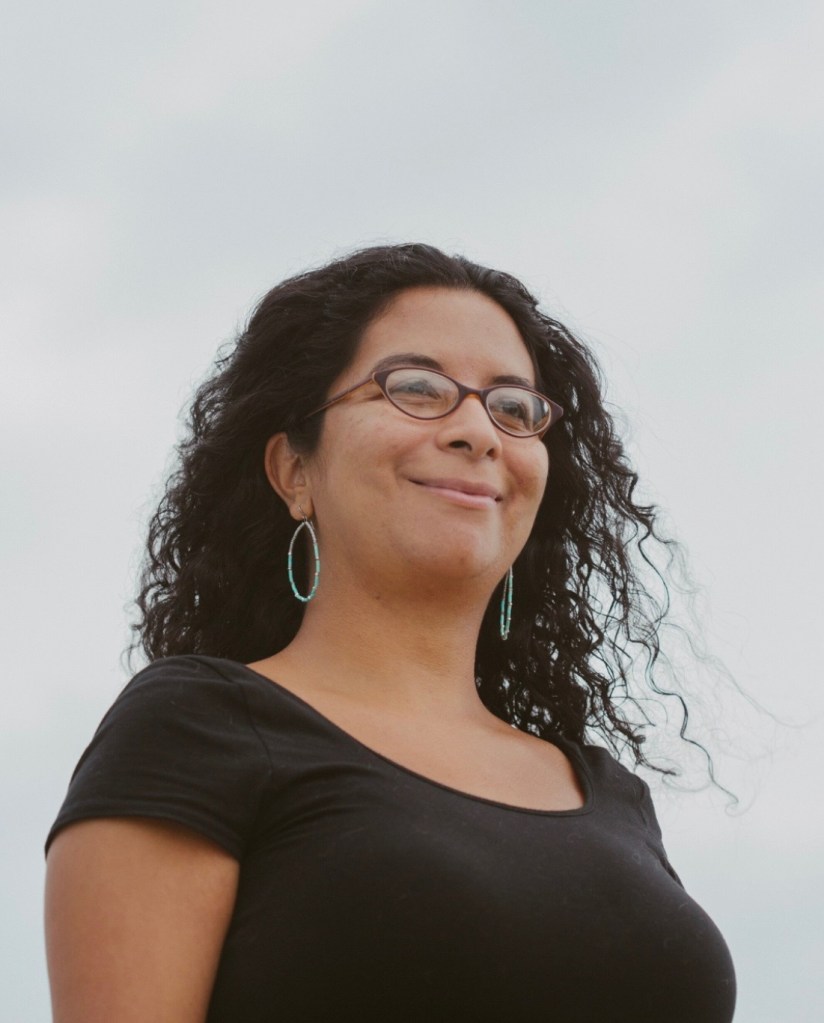
Yaddyra Peralta is a poet originally from Tegucigalpa, Honduras. She immigrated to Miami with her family at the age of six. It was there that her passion for poetry began, sparked by an introduction to haiku from her first-grade Spanish teacher. Her essays and poetry have since been featured in anthologies like Eight Miami Poets (O, Miami, 2015), The Breakbeat Poets, Vol. 4: LatiNext (Haymarket Books, 2020), and Home in Florida: Latinx Writers and the Literature of Uprootedness (University Press of Florida, 2021). Yaddyra holds an MFA in Poetry from Florida International University and brings to her role as O, Miami’s Director of Civic Publishing her extensive experience working with writers of diverse backgrounds and her six years of experience in the publishing industry. She recently talked to Gulf Stream’s Assistant Managing Editor Kamila Izquierdo about O, Miami’s latest project, Literally Everyone’s Invited: An Ode to South Florida.
Kamila Izquierdo: So, in your bio it says that you are O, Miami’s Director of Civic Publishing. I wonder if you could start by telling us a bit about yourself and what that amazing title really means.
Yaddyra Peralta: Before I give you a little bit more of an overview of my bio, I have to say that I also have ties to FIU’s MFA program. I went to grad school there, and while I was in grad school, I was also an assistant editor at Gulf Stream. So, it’s amazing to be able to circle back in this way. I’ve been a poet most of my life. I started writing at age six, after my family moved here from Honduras. That’s where I’m originally from. A majority of my career has been in teaching, not just in elementary school and high school, but also at the college level. Then I had an amazing opportunity about seven or eight years ago to go into book publishing. There was a book publisher located here in Miami called Mango, and unlike a lot of book publishers, they didn’t care that I didn’t have this extensive background in publishing. They were really interested in my love of books and literature, and so I pivoted into a career as a book editor for a while before I got the opportunity to work with O, Miami.
I have either been involved with O, Miami as a participant or as a teaching artist since the very beginning. It was kind of a dream that I had that I never shared with anyone, that I wanted to be with O, Miami. They have this practice called civic publishing, where publishing is not just about publishing in print or digitally, but also on different surfaces across the city, which makes sense given that the bulk of the archive of poetry that O, Miami has is, at this point, 40,000+ poems collected either through open calls or workshops. They publish them on billboards, on buses, on t-shirts… that is really the entirety of civic publishing.
KI: Wow, that is amazing! It’s something I feel is very unique to Miami, just seeing poems everywhere in the city. I didn’t know that you dedicated a whole branch just for that kind of publishing. This book that you’re coming up with makes a lot of sense. It’s kind of like an archive of the history of publishing through the city.
YP: Yeah, it’s a selection of the archive. ZipOdes is, I would say, the most enduring and largest open call that O, Miami has had. It has been ten years, and this form was co-created with WLRN. At some point, Scott Cunningham, the founder of O, Miami, and Melody Santiago Cummings, who is now the executive editor, got together and decided on this form that is based on the zip code. What better way to continue to allow Miamians to be authors of their stories of Miami?
KI: This reminds me, going back to your bio, you said that you first fell in love with poetry in the first grade with your Spanish teacher through a haiku. That form is sort of similar to the ZipOde in how approachable it is because of how short and sweet they are. So, I wonder if you could share a bit of that memory. Was it the form that sparked that love for poetry? Was it the poem that you were writing? What was it about the first encounter with poetry at such a young age that made you completely fall in love with it?
YP: That’s a great question. I do feel it was partially the form. I mean, you’re right, the form is really approachable, and the best haikus are about how you can insert a view of the world in one moment, within that one poem, and do it in a way that says something about you and your voice and the way you look at the world. Because it was a haiku, it made it doable for me. It made me want to do it again. I was in the middle of trying to learn English at that time. It took me a while to catch up with my classmates in terms of reading and all the school subjects. It was a really difficult time for me from what I remember, and so just being allowed to express myself was another aspect of it. I will say, though, going back to publishing, because I started writing haiku and other kinds of poems all the time after that, I was often entered into the Miami-Dade County Youth Fair. I felt that being asked to transcribe my poem onto this beautiful construction paper that was then laminated and sent to the Youth Fair, and then winning a prize, which I usually won second place, was a form of being published. So that, too, made me realize it was a way of interacting with the world that I enjoyed.
KI: That was like a first taste of the idea of publishing at such a young age. It kind of goes hand in hand with what ZipOdes are doing. I walk around Coral Gables, and I see on the windows of stores a ZipOde, and it’s by a kid who is five years old. We have local people from Miami published in this book and it emphasizes the importance of saying yes, this poetry belongs in that bookstore, on someone’s bookshelf. To see your poem in the middle of the city with your name on it, and then to be able to see the poem in this book, I feel that’s such an exciting opportunity that breaks the wall of what poetry can sometimes be thought of. Poetry can seem constrained from the outside if you don’t know how to get in. This project and this book really help bring more poetry into the city and more people into the poetry.
YP: Yeah, I agree. It’s something that we hope is more democratic than what usually happens in the publishing world. I lived in New York City for a while. I went to college there for the majority of my coursework. I remember I used to enjoy Poetry in Motion, which was a program by the Poetry Society of America where they would have poems in the subway. That was wonderful. I think the difference was that it was like Emily Dickinson or Walt Whitman, or it might be a living poet, but it was someone who felt like they were elevated, someone who came from a different world. This is different. This is, like you said, being a six or seven-year-old, and maybe not even being the author of that poem, but knowing that someone like you can author a poem and have it out there and say it the way a South Floridian would say it. Using Spanglish, using that Miami accent or that Miami idiom. That too is a big part of it.
KI: It definitely invites you to be part of it and indulge in poetry, which is also something that I saw in the book. I found it very interesting that the very first page of the book is a “how-to guide” on how to create a ZipOde. I wonder how you came to think about starting with, here is how you can write a ZipOde, instead of presenting all the poems and then ending on that guide. It feels very purposeful for what O, Miami wanted readers to get out of the book.
YP: That’s a great observation. Yes, it’s an ongoing open call. Even though we really only publicize it once a year prior to the festival, because we have our yearly ZipOde reading at Vizcaya (Museum & Gardens), it feels like it might be a seasonal thing, but it actually is ongoing. We take ZipOdes at any time, and we’re hoping that this book does not have a feeling of finality where it is published once and that’s it. It really does continue, and we want people not just to see themselves in the poems, but to feel like they can also author poems like this.
KI: I think that at that first encounter with the book, I was like, oh, I need to write one right now.
YP: Amazing. I hope you do, and I hope you submit as many as possible.
KI: Another aspect of this book that I love is the visuals. The photography is beautiful. I was really interested in one of the introductions. The photography editor, Gesi Schilling, writes, “This collection of images demonstrates what photography can do, rather than what photography is. It can be a valuable place-making device, building community while at the same time making us feel like we are a part of one.” How important was it for this project to have that visual component as well? Was it having the ZipOdes and then thinking you needed the pictures to accompany them, or was it an idea that came together from the start?
YP: I’ve been with O, Miami for a year, and the book was already coming together before I joined. We’ve published one other photo book, Ventanitas, which is about the ventanita coffee culture in South Florida. I think there was always a desire to do something else. Another thing is photography as part of O, Miami’s practice. We document as many of our projects as possible. It is a way of sharing what we do across all of South Florida. The ZipOdes themselves are really vivid, and we wanted to bring them up a notch with the photography. I think it is cool the way that Gesi Schilling did it, which is that she wanted to assign zip codes to different photographers and see what was brought back. We received so many more images than what are in the book.
KI: I think that pairs very nicely with what you were saying before, the ZipOde as this one moment in time, and the photographs as a moment in this zip code location as well. In one of the opening pages you have the ZipOdes by the numbers, which highlights the statistics of the words that have been used the most in these poems. We go from the opening page telling you to do it yourself, to this page saying here is what your community is thinking and writing. Why do you think that is an important page to have in there? What reaction are you expecting from the reader, seeing something like that at first glance, before we even dive into the poems?
YP: So, Melody Santiago Cummings and Sarah Trudgeon, who is the poetry editor in this book, in many conversations can offhand tell you, I see mangoes a lot in these poems, or oh, I see peacocks. Oh, which peacock poem? And they have a lot of them either memorized or mostly memorized, and then they can jump into the archive and look for them. So, I think that has always been part of the conversation in terms of just the occurrence of some of these words and themes.
The really cool thing that happened recently is that I was sharing this page with someone in Broward, and they said to me, what’s an afilador (itinerant knife sharpeners)? And so, I had to explain that having lived in a neighborhood that had an afilador, I could hear the announcement coming from the van that they were driving around in at the same time every single day, and the little song that you hear to let you know that the afilador is coming. Also, I don’t know the exact origin of the afilador in South Florida, but I know that there are counterparts in my Honduran childhood of having shoe repair people walking through the neighborhood and announcing that they were there to repair shoes on the spot or bring them back. That was really cool to be able to have that conversation with someone.
KI: In the afterword by Caroline Cabrera and Melody Santiago, they describe the ZipOde catalogue as, “…more than an archive—it’s a data set, a poetic census. ZipOdes have enabled us to comprehensively capture what makes a community,” which I think goes into what we were just talking about, the idea of the sounds and words that you have within this one community. How do you see a ZipOde functioning as both a creative but also a civic tool helping to reveal what unites a community?
YP: That answer is almost tied to that infographic but is more complex. A part of it is the conversation of what things come up in ZipOdes that are common, but also what things come up that are surprising. One thing that I never thought of, although it makes sense to me, is that they both have told me that fruit theft or mango theft is something that comes up a lot in the ZipOdes. I can relate to that because I have a mom who loves to pick fruit from other people’s yards if she can get away with it. It’s always a little embarrassing for me because I don’t want to get caught. But to see it in a poem from someone else in another part of the county, I realize, oh, that’s not just my mom’s thing, that is a South Florida thing.
KI: I also have a mom who does that, and I also feel the same way. I have a question that includes Campbell McGrath, and since you have been in FIU’s MFA, I think this will resonate. In one of the essays from the book, Alicia Zuckerman brings up McGrath’s idea of how the Miami Poetry Collective aimed to, “…rescue poetry from the airless box in which American society has locked it away,” which I think is a very Campbell McGrath thought. How do you think this philosophy applies to the ZipOdes, and to having chosen to do a book about this form instead of classical forms that can be longer and more imminent to the mind when one thinks of poetry? Why the decision to move away from that and rather focus on the poems from our community, the ones everyone submits?
YP: The main aspect that aligns with what Campbell said is, one, having this open call be ongoing and open to all the members of the community. As a poet who has had to submit work, this is not going into Submittable and having to write a cover letter and having to list previous publications and feeling that that might weigh for or against the actual poems themselves. The submission process is literally just: submit your poem and give us at least your first name and contact information so that we can contact you if you get published. If you are someone who works a day job and writes poems occasionally, versus someone who has never written a poem, we wouldn’t really distinguish.
I think the other aspect of this zip code that I think is special is that when I have had the opportunity to go into classrooms and teach the ZipOde, I really emphasize thinking about where we live and writing down what is special about our neighborhood, or ordinary but special to us, and focusing on that. It is amazing and surprising to me that we get such distinctive poems, that we get poems that have people’s voices, that we have poems where people use the word “bro” three times, and it ends up being a delightful poem. It gives you a snapshot of what it is like to walk through a particular part of Miami. I don’t know if this answers your question, but I think it is multi-layered in that way.
KI: In the first page, you have the QR code telling us to submit. Just do it right now. It is really calling for it. With the traditional publishing route, it feels like you have to make the call, and in this case, it is O, Miami calling you to be part of this really big, beautiful tapestry of poetry.
I love the idea that these poems can construct the city, and you can feel yourself walking around these neighborhoods in these zip codes by the things that you are hearing and the things that people are thinking about. One thing that I found very interesting was the last essay at the end of the book by Scott Cunningham, who moved away, but he was the founder of O, Miami. In his writing, it feels as if he might not be in Miami right now, but Miami is still with him. I want to ask you a final question about legacy. As someone whose work is deeply rooted in this community, how can projects like ZipOde help preserve and transform our sense of home beyond the city itself?
YP: While I have been writing since I was six, I didn’t really decide to call myself a poet until I was in college. I was at Queens College in New York. And of course, being in a city that has so much artistic and creative history, my sense of poetry back then was, you know, Poetry in Motion, those poems on the subway that you had to ascend some kind of great height, however that was, to write legitimate poetry. And moving back to Miami, getting to be a student of Campbell’s, but more than anything, seeing the poems that the residents of South Florida have written and how unique and distinctive and varied the voices are, have really transformed the way that I think about poetry as a reader and also as a poet myself.
So, I feel like now I look at poetry differently, and I would hope that if I do end up living somewhere else, I would write a ZipOde in those zip codes. But really try to begin to see what is around me, what is special, what is unique about what is right there in front of me. The haiku also has you do that. I hope that if I am writing about New York or London, my Miami accent is coming through as well.
Yaddyra Peralta is a poet originally from Tegucigalpa, Honduras. She immigrated to Miami with her family at the age of six. It was there that her passion for poetry began, sparked by an introduction to haiku from her first-grade Spanish teacher. Her essays and poetry have since been featured in anthologies like Eight Miami Poets (O, Miami, 2015), The Breakbeat Poets, Vol. 4: LatiNext (Haymarket Books, 2020), and Home in Florida: Latinx Writers and the Literature of Uprootedness (University Press of Florida, 2021), as well as in various publications including BOMB, The Florida Review, Ploughshares, and The Miami Herald. Yaddyra holds an MFA in Poetry from Florida International University and brings to her role as O, Miami’s Director of Civic Publishing her extensive experience working with writers of diverse backgrounds and her six years of experience in the publishing industry.
Kamila Izquierdo is a poet, hybridist, and novelist born in Cuba, raised in Spain, and based in Miami. She is currently enrolled in the creative writing MFA at Florida International University, where she serves as the Assistant Managing Editor of Gulf Stream Magazine. Her work explores themes of home, belonging, and being a flâneuse in the modern day.
 Gulf Stream Magazine