
by Mellissa Sojourner
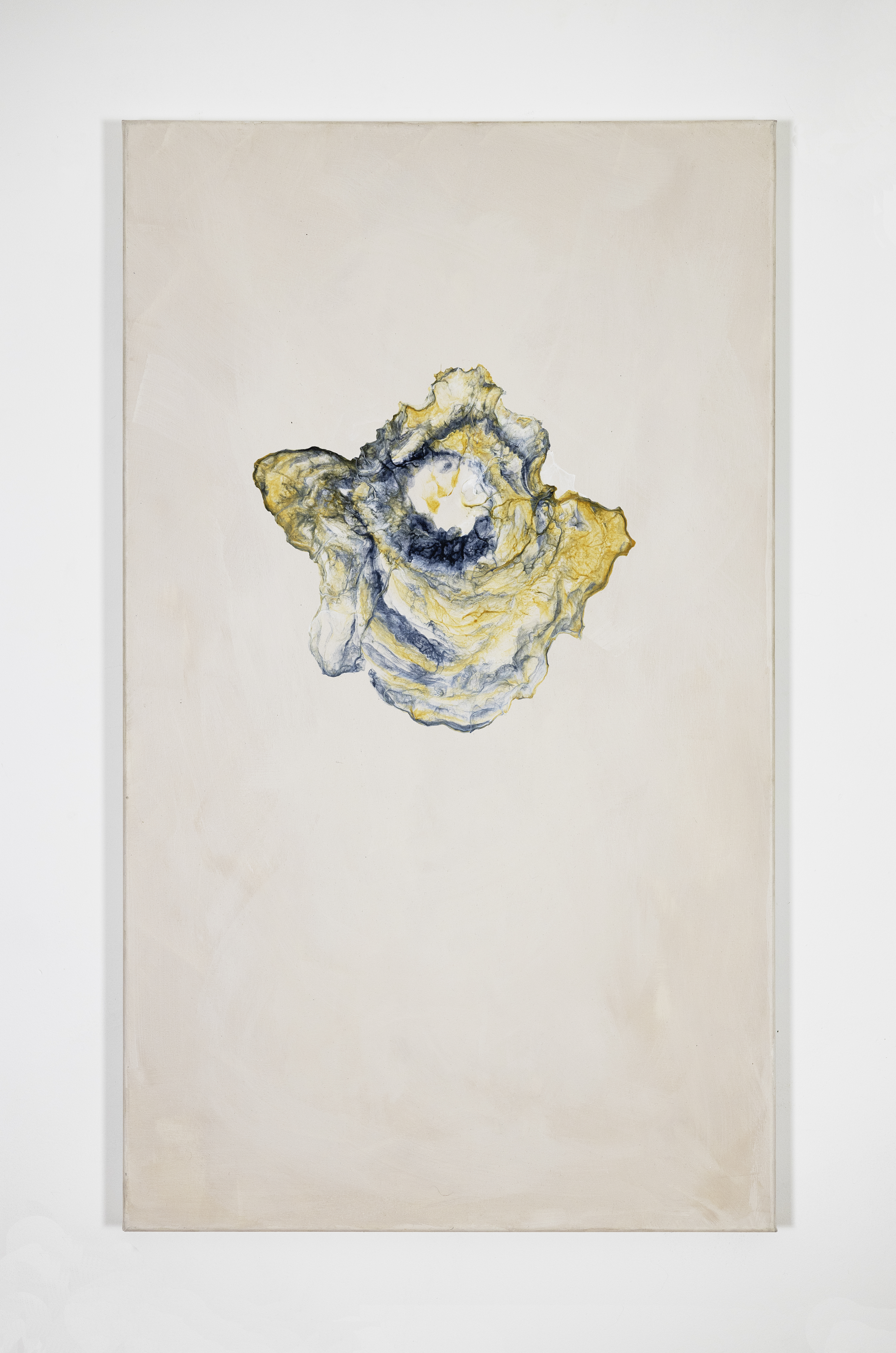
The Couple at the End of the World
When they tell the story of their initial encounter to some newly acquired friends, they spend at least five minutes interrupting each other over the way it all began. Maya had been working as a bartender in a small outpost just off the highway, and Drew was nearing the end of his route hauling farm seed across the Midwest. On the night they met, they each confessed so many things that leaving out the most important pieces of information felt like minor oversights. They can recall Drew showing Maya the tattoo of Saint Christopher on the inside of his upper arm. Drew admits that he stank of diesel, and Maya admits she has always liked the smell.
The wind had been restless, and when they stepped outside after closing a thin film of dirt, the color of rust, had coated the cars. Maya remembers Drew coughing. He didn’t live in Kansas City and wasn’t used to the way the ground and air mingled together, the way it tasted like an upturned graveyard. There was only one bulb of light in the lot, and they stood beneath it, let it pour over them like holy water. Maya heard the busboy shuffling garbage out the backdoor and was reminded of the obligations she had, of the limitations of time. But she remembers being unable to move. She can picture the way the light dove straight down his face, half shaded, half exposed. Drew can acutely recall the breathless feeling of risk. They admit that they knew then, even if the knowledge was pebble-small, that their hearts were beginning to tangle.
As they leaned against his rig, Maya offered a dare—a gentle push. Night was already being edged from the horizon when she said: “Bet you won’t come back again.”
Drew always tells his audience about how difficult it was to leave. He’s never felt more filled with gravity. “She was wearing this low-cut number,” he’ll say, “and she’s blessed by God, you know.” Drew will elbow Maya and wink. But her mind goes to a different memory. She thinks about his eighteen-wheeler being sucked into the purple sky and the way the sounds of night closed in around her. She remembers looking down at her fingers and seeing the orange soot from where she had pressed them against the cab. Although they never discuss it, she wonders if he felt the same pang, the same flood of relief when he drove away—of having your toes curl over some precipice and then backing away with everything still intact.
#
True to his word, Drew showed up again a week later, working his way back across his route. “I’m gonna finish these rounds over here,” she told him, “but you just wait right there ‘cause when I get back, I’m gonna say somethin’ real smart.” Without ordering, she placed a glass of whiskey in front of him, and he ran his thumb across her wrist.
Later that night, cradled in the cigarette-bathed booth that sat across from the pool tables, she placed her head along his chest as they compared adolescent wounds. It started with scars—a gash in the eyebrow, a clavicle that didn’t heal quite right. Once they ran out of body parts, they moved to deeper sores—parents that left, prospects that never materialized. They did their best to stitch each other up.
People are often most curious about the leaving part since they always say that they ran away together. Most picture some lovestruck teenagers and a cloud of dirt. Looking back, they wish they had something more to tell. Drew likes to reimagine the moment, suggesting that perhaps he left the engine idle while Maya snuck into her walkup and ran out minutes later with a bundle of clothes flapping in the wind. But they had simply left one place for another. For Maya, the notion of being on the road sounded romantic. He didn’t have the heart to tell her that after a few days, it wasn’t. But he wanted her. He wanted her to smile. He wanted her to laugh. He wanted her to love him enough to make a difference.
#
Before they ran away together, Drew never told her he had a child—a son, who’s new father spent half the year on an oil rig in Alaska. It hit him square in the chest as Maya was white knuckling the wheel over a two-lane bridge in Maryland.
For miles it had been the greenest of scenery, pastures freckled with cows and low-lying fences that crawled along the hills. The boy was often on his mind, but he had so few concrete memories that it wasn’t until one jarred loose, unannounced, that he thought to mention him out loud. He was only ever a baby in his mind—a soft, swaddled little thing. In the memory that sparked, there had been an old walking bridge and some photos taken; it was after the boy’s baptism. He almost laughed to think of it—he had once been the kind of man to baptize his child. It was a different self. How many iterations would he get? He could still feel it—the sudden, uneasy absence in his arms the moment he lifted the child to the priest—an absence that would become permanent only a few months later.
As they reached the other side, he watched Maya let down the breath she had been holding. The boy’s name was on his lips. Nathaniel, he almost said out loud. I have a son named after my grandfather; they call him Nate. Maya placed her hand on his knee and the words remained lodged inside.
#
Neither anticipated the nights they would spend sleeping in his pickup truck, the menial jobs they would be forced to take. Drew, who had been on the road for years, knew what she did not: the way it would feel to be rootless. By snipping the cords of their lives, they had ensnared each other.
They skimmed their way through the Carolinas, living like bums. Maya waited tables at an outdoor barbeque joint for a month, collecting trays from the back of a rusted-out airstream. There, she learned how to soak wood chips for the smoker from a man with fewer teeth than fingers. And then there was a resort town along the Golden Isles of Georgia where they became extra hands maintaining a campground soldiered with moss-laden oaks. Maya fell in love with those trees, with their gray, dripping tendrils and branches that twisted and bowed to the ground. By the end of their shifts, they were each filthy and tired. But it wasn’t a bad gig; they were able to stay in one of the empty cabins when one was available. The place was a former summer camp and most of the rooms were wall to wall bunks. When he couldn’t sleep, Drew used the light of his phone to study the angular names and crude scribbles carved into the wooden frames. It was a small comfort, knowing once a child had been racked with insomnia in the same bed as well. They had grown-up and figured it out, surely. Maya snored the whole first week like she hadn’t slept in years.
It was easy to pretend there for a while, in some space between future and past. Even the surrounding landscape was a strange in-between—a place where the land began an easy, quiet slip into the marsh. A shift that might go unnoticed entirely if it weren’t for the high grasses that defined the edges. Soon, time ran out, as it always does. Drew had begun fighting with the director and Maya’s hands were covered in rashes from poison ivy. She can remember how the ointment hit her veins and sent a metallic trickle down her throat. They left before someone made them, in the middle of the night after they had collected their cash. By the time they got to the highway, the morning dew had risen into a mist, moving from the waterfront to the roadway, where it followed them for miles, before it too left without notice.
#
Sometimes the road was so empty that they grew unaware of each other’s presence for a while, especially early mornings in that wet glow of headlights along the highway. Then one of them would flicker up in the other’s thoughts, and their bodies would reach out, hand on hand, hand on knee, wanting more.
It’s hard to determine how they ended up in the Keys, but at some point, it felt inevitable. What Maya hadn’t expected was the tail-whip of it—how different it would feel than any of their previous drives. Perhaps it was the sunshine burning with glorious warmth through the windshield, or the wind-laced turquoise waters, but it was foreign to each of them. As they traveled across the Seven Mile Bridge—a feat of man connecting island to island, an achievement meant for birds, Drew felt a hopefulness, long abandoned, returning. It was simple, really: He had never had an ocean before.
For Maya, it felt like they had gone too far, driven straight into the abyss. They couldn’t even see the slip of land they were heading towards for quite a while. We’re headed to the end of the world, she thought. It made perfect sense—the end of the world must be flat and strange, and punctuated by lizards. Even the palm trees seemed to agree, barely casting shadows, polite in their placement as if stepping around the obvious.
They were both tired of moving, tired of burning through money and it wasn’t long before Drew found steady work at a breadfruit grove, and they traded in his truck for an old RV and some banana-seat bicycles. Maya often thinks back to their early days on the island. How good it felt to occupy their own space. How quickly they cluttered up and began calling the RV home. But still, she was all twisted up inside. It was a while before she stopped feeling some phantom road moving beneath her, tires bouncing, the air burning with rubber. During their second week, she was sitting alone in a plastic foldout chair in the square of dirt they occupied when she smelled the charcoal smoke of a neighbor’s grill and began to weep.
They made it a habit to learn the island by night. Hand in hand walking together in the breezy moonlight—a different bottle almost every evening. They mixed into sweaty crowds of tourists, stumbling out of a rum-soaked bar, grabbing up snippets of loud conversation. And then, down another street, it would be nearly silent with only the occasional wind chime haunting the dark. Just the two of them, weaving between the white picket fences and conch houses, searching the trees for the sudden lump of a sleeping iguana. They made up little games, tried to jump the low hedges, laughed at each other tumbling into bushes. Once, a cocker spaniel followed them all the way home, climbed into bed and slept between them. They scrambled it eggs the next morning, hovered attentively over it, having no idea how to care for anything. In some way, they each wanted to keep it, but it darted out the door the second it was left open.
#
In the mornings, there was never any traffic, so the streets were mostly empty. Shorebirds picked at the trash that had fallen to the ground, skittering, fighting amongst themselves. Pastel-hued shops were just beginning to stir. It was hard to stay miserable in a place full of sunlight and hermit crabs. When the temperature was mild, she would bike the long way home, crunching along the shell-graveled road where the wind was constant but gentle and carried the brine of the barnacled docks and the fishermen cleaning their catches. Her favorite spot: a narrow, rocky path between the thick patches of mangroves on the bay side where she could carry her sandals and tread out with the cool, shallow water around her toes, listening to the steady slush…slush of tide receding and then rushing softly against the roots. Once, from that perch, she spotted a key deer, swimming offshore between islands—a jarring sight with its delicate, pointed ears straining above the water. How did you get here?
Sometimes she stayed long enough to watch the sun peel itself in a bright streak from the sand to the horizon, glowing at the ends like birthday candles in a darkened room. There are many days where that is enough—where she can imagine nothing better.
Keys life suited Drew. When he was moody, he fished, and when he was charming, he went out drinking. Either way, he attracted company. On nights out together, usually in some thatched-roof tiki bar, they laughed over blue umbrellaed drinks with a new set of acquaintances. Always with plans and hugs and promises and no follow through. Drew liked it that way. He wanted to dip his toes into everything and come away with nothing.
What he failed to understand—what she never told him—was that the days had begun to flicker along differently for each of them. For Drew, each day’s passing made space for another—another attempt, another chance for a good time. Tomorrow could bring the sighting of manatees in a seagrass bed, or an invitation to go out diving in Looe Key. For Maya, each day that parachuted by was something lost—a future day—another turn about the axis with its endless possibility, swallowed whole. There was an instinct she couldn’t shake—that someone out there was living her life, and she, instead, was evaporating at the edges, disappearing one millimeter at a time. Who could ever understand that she was full of mourning? This troubled her, and without any sort of planning, she began a slow, methodical retreat.
#
For Drew, the idea for constructing a boat arrived at sunset as they were both squinting into the distance. The water was glass, and they were each studying its curve in the distance. Even the schools of bait fish, usually rippling the surface, seemed to respect its stillness. The tops of Maya’s knees were badly sunburned, and she was protecting them from the dying sun. He noticed that she covered them with the cups of her hands and continued staring out at the water when he told her. Imagining, he thought. Doubt, she felt.
But in the months that followed, he set up a large makeshift tent next to the RV and began dragging home marine plywood from the lumber yard until they had a pile high as their windows. It was slow work, and Maya was sure it would never be completed—that the mound of wood scraps would never be curved into the shape of a boat. But the project occupied Drew, seemed to sustain him. She thought he would tire of it, surely, knowing how long it would take.
By spring, the royal poincianas were blooming all over the island, bright red flowers coronating the treetops, but Maya barely noticed. Drew was different in ways she should have been thrilled about—he was focused and less erratic. All the little shifts in disposition she had grown accustomed to were replaced by a steadiness that puzzled her—that made her edgy instead.
Sometimes, while he worked, she sat outside and read trashy magazines, strangled with some strange form of jealousy as she listened to the table saw screech and churn. Every extra dollar was spent on saws and clamps and polyurethane. After a few bitter arguments, it became clear he wasn’t going to budge. Each night, she listened to him drone on about notching and planking. Sawdust was tracked all over the RV, the carpet, the hair of his forearms, a fortress of splinters. They only took off their shoes when they crawled into bed, where she was sure he dreamed of transoms and perfectly shaped motor wells.
She wasn’t wrong. Drew dreamed of blowing the dust from freshly sawn edges and the static feel of sandpaper vibrating beneath his hands.
As the summer enveloped the island in a humid swarm, Maya began showing her agitation. It was in her touch—like a flitting bird, unwilling to settle long in one place. She felt that if he was going to change—try to improve himself in some way—he could have at least discussed it with her first.
Whenever he was gone, she peaked in and checked on his progress. For some reason, fear perhaps of what was to come, she never wanted all three of them in the same space together. It began to gnaw at her when the skiff took on human-like form. One day it had been scraps of lumber, and months later, it suddenly resembled a ribcage. She began to worry that it stood a chance.
Sometimes, she wondered why she stayed. Maybe she walked out the door, suitcase in hand, and remembered she only had a bike. Maybe his shoes were by the door, and the reading glasses that made him look unexpectedly noble were watching her from the counter. Or, maybe, the boat had become a thing they each needed to see through to its end.
Still, in the darkest moments, she wanted to destroy it—daydreamed about soaking it in kerosine and turning it into a raging bonfire. But she knew it would destroy him and then they would be forced to start over with less than they had to begin with. Besides, her best ally was the sea breeze and potential storms that were sure to arrive in the coming months. All she needed was a little wind, a little warping. If he was forced to start over, it would be finished.
God must have hated her that year. When she needed it most, the weather was mild, and when the first tropical storm developed over the Atlantic, a bachelor friend of Drew’s let him move the structure into his two-car garage a mile up the road. He was always laboring over it, studying its pores and waiting for the finishes to take. Even when he was home, he was buried beneath navigational charts that when unfolded, took up most of the living space. The tension between them slipped into something worse: a normalcy.
There were so many times when Drew doubted that he could pull it off, when he worried one misstep had tanked the whole thing. But sure enough, almost a year after he started, the hull was finished, and with the help of a local engineer the wiring systems and a second-hand outboard motor were installed. With that little bit of machinery, it suddenly looked like the real thing.
#
When the boat was ready for a trial run, Maya was a mess of nerves. Drew was all anxious hope and unblinking eyes, easing the boat inch by inch down the ramp. By the time the trailer hit the water, the crabs had toed out from the rocks and Drew’s clothes were drenched with sweat. The wood was so shiny, like a toy, but it was floating, daringly seaworthy. Standing together in the silt, flipflops suctioned, Drew squeezed Maya’s hand, but she remained quiet, wondering if he would take note of the pause she held before she smiled and touched his neck.
They climbed in and started off into the channel, idling by the buoys and then picking up speed as they broke away, leaving a white wake behind them. Winds grew stronger the farther they went from shore, flicking the water into peaks all around. The forecast hadn’t called for rain, but everything was darker than it should be and no one else was out, not even the birds.
Ahead, they could coast toward the wall of mangroves where the water remained calm and protected—the place he promised they would go. But beyond that, should he change his mind, struck by some unfettered ambition, all she could see was endless ocean. “Drew,” she said, but he couldn’t hear her from a few feet away over the deafening rumble of that old motor. A fisherman’s hat was tied tight beneath his chin, the long tail of it whipping against his neck. She could feel his boldness growing. How had she learned to love a stranger?
He was standing there at the wheel, eyes trained ahead, unaware, and suddenly, as in a dream, she lacked the strength to call out. The desire, the noise was there inside, echoing through her bones as she stared at the familiar lines of his back, but nothing would come to the surface. She reached for his name again, a whisper she could barely hear herself. Why wasn’t he looking back at her? The varnished plank of wood she was sitting on creaked and scratched at her legs, and she could feel every slap and hollow dip of the current rippling beneath them. She bobbed up and down, feeling like a forgotten mullet—the last one tangled in a net on the sand. Eyes to the horizon, she remembered, feeling a twist in her stomach, looking out ahead. Something appeared to her then. She could have sworn she saw something familiar in the distance—a pair of ears, an old friend—Help, she thought, standing, moving to the edge, reaching out.
Drew was focused on the markers, but they were hard to find in the chop. He was no longer the man on shore, watching another man head out to sea. He had waited his whole life to feel so alive. Out of nowhere, a buoy appeared on the wrong side of the boat, and he cut the wheel hard and lurched the throttle, terrified to catch the hull along a sudden bulge of rock or reef. He didn’t hear the splash. By the time he turned, well after he felt the boat heave, when the absence registered at last, nothing was visible between the swells. In his confusion, he cut the engine and pressed his palms into the side of the boat, yelling for her, screaming her name into the breaking water, searching for upheaval, for the raising of an arm, for a shadow beneath the surface.
When she went under, all the way under, it felt peaceful—a muffled, captured sort of silence, but when her head broke the surface, she was back again in the world she knew, thrashing and choking out the salty brine, wrestling the waves. And there it was, cutting a valiant path through the current—that peculiar key deer swimming toward the island of mangroves. She struggled to keep her chin up, to keep her arms circling, trying to stay in one place so she could be found. The sun broke through. The shine of the boat was in the distance, a sound, a voice, spectacularly small, carrying the shape of her name across the water. The clouds thinned overhead, and her calves burned with treading. The deer became a ripple ahead of her, a path, and so she swam.
Author Mellissa Sojourner’s short fiction has appeared in Catamaran and is forthcoming in the Missouri Review. Her work has previously been published in the field of philosophy. She lives in Florida with her husband and two children and is currently at work on a collection of stories.
Artist Shae Meyer was born in the shadows of the Rocky Mountains in Boulder CO. After moving to New York City he began working in studios producing large scale paintings for artists there, while developing his own processes. He now resides in Troy, NY where he paints, and grows plants.
 Gulf Stream Magazine