
by Travis Cohen
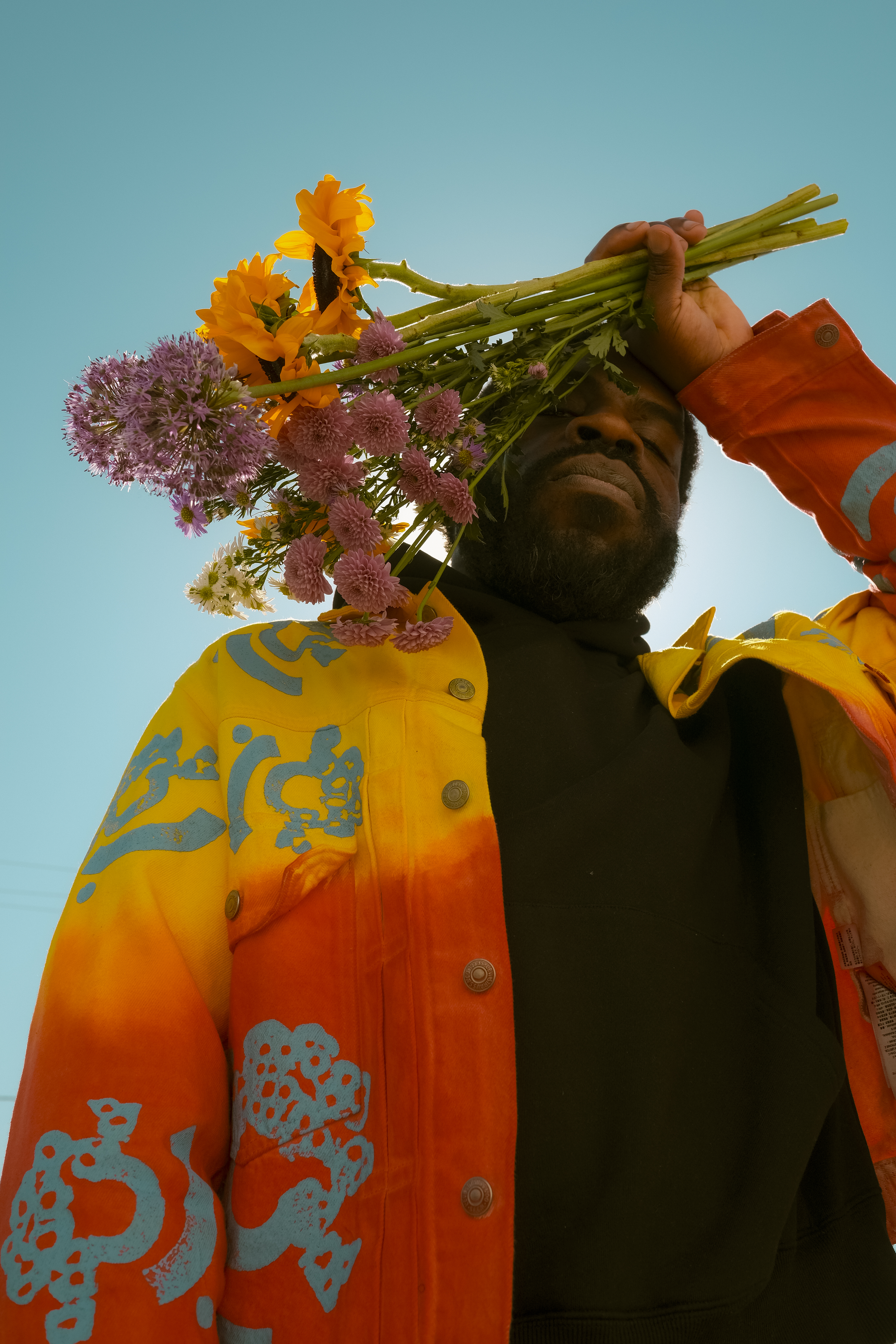
Hanif Abdurraqib is a poet and essayist, as well as a critic and connoisseur of music and culture. He is a man dedicated to bearing witness and his accolades are many and deserved. In 2021, he was awarded a MacArthur Fellowship and he was recently named a 2024’s Windham-Campbell Prize winner. He is the author of three previous collections of essays and three books of poetry, including They Can’t Kill Us Till They Kill Us, The Crown Aint Worth Much, and Little Devil In America, which won Andrew Carnegie Medal for Excellence and was a finalist for the National Book Award. His most recent book, There’s Always This Year: On Basketball and Ascension (Penguin Random House), is a bold and ambitious work of hybrid writing unlike anything he has ever written and unlike anything the author of this interview has ever read. Hanif recently spoke to Gulf Stream’s Assistant Managing Editor Travis Cohen just before the book was released. Their conversation has been edited for clarity and concision. There’s Always This Year is out now.
Travis Cohen: Okay, so first off, thank you for taking the time. I was reading the book tour schedule last night and I was exhausted just looking at it. I know you’ve been doing a ton of interviews already and I know pub day is in two days, so I really appreciate you taking the time.
Hanif Abdurraqib: Yeah, of course, thank you for taking the time.
TC: I want to just jump into things, so I don’t bite into any more of your night than I have to. The first question comes from something I read in an author statement you gave Winter Tangerine a while back. I wanted to start with that because I wanted to start in sort of a broad sense. The quote is, “I haven’t always thought of myself as a poet this year because I was told I had to think of myself as something else, or I was talking about essays more than poems, more about essays than poems. Or I thought I was too sad to be anything but sad.”
I wanted to start by just asking how you’re doing these days and how you’ve been thinking of yourself these days.
HA: I think I’m doing okay. It’s always a bit disorienting to release a book, I think, being places that don’t always feel close to home and doing interviews and doing photoshoots and all this stuff can kind of be disorienting and kind of separate the actual self from the self that other people imagine. But I think I’ve done really well for myself this time around, I’ve approached that pretty healthily, a lot healthier than I have in the past. It’s been good to get some time at home before getting on the road. All these things kind of bring me back in touch with the full version of myself, the full person I am. That makes everything else easier.
In terms of writing, I think I’m less beholden to genre now than I’ve ever been, and I never have been too beholden the genre. But now it feels like every time I sit down to write, I’m sitting down to write in the pursuit of beautiful language to make sense of simplistic, thematic obsession that I’m hovering around and that has worked really well for me. So that’s been really freeing and just kind of allowed me to touch home even when I’m not at home.
TC: That’s awesome. I’m very happy to hear that. I wanted to jump off something you mentioned as far as this being a healthier go at touring this time around. There’s another interview you gave to Newfound that had a line I wanted to ask about: “I’m often thinking about the mundane act of living – rather, what it is to be alive in a life that none of us particularly asked to be born into and trying to make the best of it regardless.”
I feel like I’ve seen you make more and more mention over the course of the past year online about growing older and growing into yourself and growing out of a place where you didn’t necessarily enjoy being alive as much. I’ve tried leaning into that as well in these last couple of years and I’ve seen that shift in perspective have a ripple effect in a lot of facets of my life and my writing, both what ends up on the page and the process of getting it on the page. I wonder how you’ve seen that shift affecting you both as an artist and a person?
HA: It positions me closer to gratitude, I think. Gratitude to chase after the work with a more expansive emotional and ability toolbox that comes with having lived. And to be aware of that growth of the emotional toolbox and the actual skills is to be aware of the fact that you have lived and, in my case, that sometimes means you have survived. And I think there is nothing for me that’s left beyond that but gratitude and particularly considering the fact that survival is not always something that I have desired and I still in some ways take it for granted that every day I get to wake up and ask myself the question of how do I feel about being alive today? To have that answer come most days easy, that kind of colors my living with a sense of gratitude and also a sense of urgency. Because I know how flimsy my personal relationship with the living world and even the small and much more survivable world I’ve built for myself – I know how flimsy those things are.
So there’s gratitude, but there’s also urgency. And there’s also some confusion. When you’ve lived beyond the point where you imagine yourself living, you are kind of feeling out the world as it arrives to you every day or every week or whatever it is for you and so there’s this confusion and sense of discovery. And even that sense of discovery, while it’s steeped in gratitude, it can also be confusing, but I would not want to trade in that confusion for not having survived.
TC: I think that makes a lot of sense, the gratitude and the combination of gratitude and urgency sort of fueling not just the work, but also an urgency to live and to approach each day. And the confusion kind of feels like it’s essential to discovery, right? If you know everything, you’re not going to be confused, but you’re also not going to be discovering anything either. Having an awareness of what you don’t know lets you keep moving into unknown territory and I think confusion is part of that deal.
This is the last bit of quoting you to you until the last question. This comes from a recent Instagram story of yours that made me chuckle, but it also really resonated on a lot of different levels: “I am having a great time, but also it has gone on too long, and I am ready for it to end.”
If I remember right, this was in the context of hanging out later than you’d normally like to. But it made me curious if you feel like this relates to form for you at all, why you work in the sort of synaptically fast transitions within a work – because it can kind of be uncomfortable and hurt to stay inside anything for too long?
HA: You know, for me, I’m just governed by curiosity. I’m governed by my obsessions and I think genre for me can kind of dull the approach to getting to something that feels like the bottom of the curiosity. And if I can move very quickly in between a number of ideas, I can chase after as many ideas as possible until they coalesce into something firm. But I don’t really know what that is until I’m sitting down and I don’t really know what movements a piece is going to take me on or what movements a piece is asking to go on until I sit down in front of it and ask it some real questions about what it can offer me in terms of enlightenment.
And so, yeah, that for me sometimes requires not standing in one place for too long from a genre standpoint. But I’m also trying to tell multiple stories at once. And through the telling of those multiple stories at once, I’m trying to get the larger theme to blur into one theme that is almost unidentifiable.
TC: I wanted to talk to you about what often feels like a really powerful, really controlled non sequitur. That’s how I thought about it in the past in other works of yours and reading this new book, I kept thinking about it as feeling like a transition game. A lot of your work has this quality of introducing something and then coming back to it and it feels too complex and specific to call it dealing with themes, and it feels too reductive to call it a callback. I don’t know if I’ve ever seen anyone manage the kind of braiding you do really organically. Whether you you’re talking about the U Mich Fab Five, but also about hair and about inclusion and about enemies and about young love, or whether you’re talking about the Wonder Years and the universality of sadness, your writing has this way of winding into an out of subjects that at first feel really disparate and in the end feel inextricably connected.
And I wondered if you ever telegraph those moves before you start writing? In poetry, it feels simpler because poems are shorter and those connections can sometimes happen within the momentum of the thing or through revision, but your books have this quality of lyrically blending prose and poetry that made me wonder often how much you figure out those movements ahead of time and how much of it just happens as you go?
HA: That’s very kind. I appreciate all that. Yeah. I mean, I tend to not figure it out beforehand because the movements are almost secondary to me. For example, if we were to look at that, the pregame section: the pregame section is simply about impermanence. It is about beginning with something and then watching it slowly diminish, and there are a number of ways I could have gotten there, and I knew how I wanted to begin, and I kind of knew how I wanted to end. I knew that LeBron James would be the anchoring idea, but if I thought too clearly about how to get from where I wanted to begin and where I wanted to end, then I think it would feel telegraphed, it would feel less freeform.
I’m oftentimes writing into an empty space or jumping into an empty space and trying to build something to catch me before I land and then taking inventory about how sturdy what I built is and how far that can get me before I have to jump again. And sometimes it’s small things. So if we’re thinking about it from a very material craft standpoint, there’s that James Brown detour in the pregame that’s not very long. You summon James Brown into a space and then talk about the hair doing the talking. I did not want to linger on James Brown. James Brown actually doesn’t matter but I needed that to make more sturdy the next transition to talk about brashness and arrogance and the fear that can instill in people or what a lack of hair might say that a large pompadour could not.
That is something that I just needed, that isn’t something that I was trying to maneuver. I just got to a space where I found myself descending very quickly and needed something to get me to the next thing, because without that it wouldn’t be as sturdy. And James Brown is what I landed at, but it is like that sometimes. It is just a very small motion that you don’t really know you need until you look at the page and say, ‘Ah, this doesn’t work without something else sticking these two things together.’ And it almost doesn’t matter what the something else is. I’m not saying that James Brown’s introduction in the pregame is inconsequential. But I’m saying I could’ve, if I would’ve found something else that could’ve done it more efficiently, I would’ve just used that.
TC: I think the, the point you make about the sort of danger of it feeling telegraphed is really significant and makes a lot of sense.
I want to stick with the question of craft and process and focus more directly on There’s Always This Year. I love the hybridity of this book, not just in terms of that lyricism, but in the structure. I was excited when you read an excerpt of this at last year’s O, Miami, if I remember correctly.
HA: Yeah.
TC: I was in love with what you read. And I knew it would be a braiding of things that I’m aware you love and hearing you speak through those multiple lenses was something I was really looking forward to, but it did so to an even greater extent than I had anticipated. This is not at all a straight book of essays, it’s a hermit crab in the form of a basketball game. The way you use timeouts, the quarters counting down, the way you use the timestamps – especially in the middle of sentences as sort of like a prosaic enjambment – I don’t know that I’ve ever seen anything quite like this book. And it not only lends the book this poetic quality, it also adds a propulsiveness that genuinely makes reading it feel like it’s running up and down court.
And aside from the fact that the book is ostensibly revolving around basketball thematically, I wondered what made you decide to approach it this way formally and what that process was like, writing to the breaks of a game in play?
HA: One, I think that I knew I could make it take the shape of a basketball game, not just on the page, but also in odes of intensity, that there are parts of it where it could feel like a fast break or there could be parts where it does feel like someone trying to run out of clock. But also, so much of the book’s concern is with time.
The project of the book is manifested most clearly in the pregame. Even though I know Ascension is in the subtitle, the trick of it is it is about beginning somewhere high and then slowly coming down or beginning with an abundance of something and then losing it. The fourth quarter, too, where it begins with me walking through Cleveland after the championship period and then ends with me as a very small child. Every quarter is trying to take this idea of beginning with something large and getting smaller and smaller and smaller. And so the timestamps made sense that way.
Initially, it was only going to be the pregame to have that structure. But then I really committed to this idea. I wanted to make something that I had never seen before. I wanted to make a book that I didn’t know could exist. I’m not saying that I invented something. I think I used many preexisting inventions to make a product or make a project. But I wanted to use this overarching theme, this obsession I had with time and aging and mortality and make something on the page that I had just never seen done. I wanted to do something I’ve never seen before because I am at a point in my life as a writer and in my “career” as a writer where I just know what I can do well and I know what I can do easily. And I’m not turning away from those things and those things are still at play in the book at points, but in terms of taking a really big swing, it felt like it was time to because it would maybe be easy for me to try to capitalize off of a kind of straightforward essay collection, like “Little Devil in America” was. But I think it was more useful for me to say, what can I do to take a big swing and try to land something that has never been done.
TC: I want to say, honestly, not to blow any smoke or anything like that, but I really do think that you accomplished that. And I was really surprised when I saw what was happening in pregame. I was like, ‘Oh, wow, that’s a really clever device.’ And then when I saw it continue throughout the book, I was really taken aback initially because it is a really brave move and it is something that I’d never seen done either. I get the reticence to claim ‘I invented this’ because that can maybe sound self-aggrandizing. But it does feel really new and doing something this ambitious can blow up in your face or it can be something that is a really groundbreaking big swing. And I think this is the ladder and I was really amazed technically by it and I think it works really, really shockingly well.
HA: I mean, it took a lot of work to figure it out, to make it what it was. It took a lot of buy in on my end, because it was something where no half measures could be taken. The timeouts had to be there and they had to be well written. It had to be the perfect length and the essays that act as intermissions had to be at least signaling back to something that was already existing in the quarter. It was one of those things where, if this is what we are doing, then we have to actually do it with real intention for it to work.
TC: I think the intention comes through and I think it really works brilliantly. I want to stick on the question of process and crafty stuff for one more question. I know you did the audiobook recording for “There’s Always This Year” and I think I saw you post that it was the first time you’ve done that since “They Can’t Kill Us Till They Kill Us”. In a recent Instagram story where you were talking about “Little Devil in America”, you wrote about getting more comfortable with the idea of performativity since “They Can’t Kill Us”. I also think you mentioned that a lot of the impetus to record the audio book for “There’s Always This Year” was the personal nature of the work. I’m curious how much you found yourself thinking about the reading, where the balance fell for you with this between the performative and the personal while you were writing it or maybe whether those two qualities informed each other as you were working on it?
HA: I think the two always inform each other with me. I think this book, the reading was informed by the writing in a very real way because it is not only a personal book, but I’m speaking very in depth about places and people that I think a lot of folks outside of Columbus, let alone outside of Ohio, might not know and so I know that in the reading, I may need to add a kind of tone that feels familiar and comfortable to people who don’t have access to this world I’m building so they can feel like it is their world. The whole thing with writing so intimately about place is not to try to convince people that they need to come to your place where you are, but it is instead to kind of convince people that they have already been to the place that you are trying to admire and bring to life in your work.
I think that can be through thoughtfully and emotionally reading the writing out loud. So it felt like a real task with this one to get that right and to do that as best as possible. I just didn’t trust anyone else to do that. I love what I’ve heard about the audiobook, of “Little Devil”, I’ve heard it’s amazing. The guy who read it, J. D. Jackson, read all of Baldwin’s work, so if he’s good enough to read Baldwin’s work on audiobooks, he’s good enough to read mine, certainly. But I really wanted to take this on for myself because I knew the interior world that I had built and I didn’t trust anyone to walk other people through it other than myself.
TC: Well, I’m really looking forward to the audio book because I do think that while so much of that comes across on the page, from having heard you read in person, I’m sure that will come through even more potently and powerfully with you reading your own words.
I want to step away from craft for a second and toward content and writing that’s personal for you and I know personal for me, if that’s alright?
HA: Yeah.
TC: I know a lot of your work from the earliest work of yours that I’ve read has touched on grief and on loss. Both of us have lost people in our lives, both of us have lost parents. I’ve written a lot about my relationship with my loss and my dead for the last decade. And as a writer, I think it’s a natural thing to have some intrusive fears about re retreading familiar territory and potentially being repetitive. For me, every time I’ve read words of yours that speak to loss, that speak about your mother, that speak about the losses you’ve endured in your lifetime, there’s nothing repetitive about them. It’s always authentic and honest and meaningful, not in a way that’s retreading, but that explores more deeply this thing that is or eventually will be true for everybody. And I wonder how you feel, as a writer, about delving into that sort of deeply personal, familiar territory when you’re working your way through a project?
HA: Thank you for those kind words again. I mean, it’s familiar, but not, right? I workshop with some younger writers, some high school writers, Columbus City School writers like once a month. We sit and we talk poems and we talk about our writing and then we just put our heads together on it. And one thing they’re always forever anxious about is ‘Oh, I’m writing about the same thing again,’ but that’s just not true. Say grief, for example, even direct grief, even personalized grief, say the loss of my mother – that transforms, that transforms every day.
Grief is eternal and therefore it moves alongside us and it moves and transforms with us. And so that means that, yes, you’re perhaps repeating a theme, but it’s impossible to repeat the approach to that theme because it has shifted within you since the last time you sat down to write. And so I feel almost required to keep returning just to take an inventory of how my grief is growing alongside me. Because otherwise, I would be largely unaware of that. I would take that growth for granted, too, because grief, I think, is not only pain. Grief is something that just knocks on the door of memory and it allows us to open that door and see what’s still there after all this time.
And to get to continually do that and take these inventories of memories that not everyone has access to after loss, I feel gratitude for that. I think returning to the work and returning to that thematically is celebratory. It is a moment of exuberance. I think that at times I can really write about grief – or I hope that I can really write about grief – with a sense of just overwhelming pleasure, not pleasure for having lost someone, but pleasure for having the opportunity to once again bring them back to life, even if it is in a fleeting way on the page. And to know that my bringing them back to life is furnishing another room in the Museum of Their Living that I have not been in yet because I don’t know how to get there yet until I’ve lived a little more myself.
My hope is that I’m never done with my kind of overall themes. I’m from the Johnny Cash school of thought. I really love Johnny Cash and early in his career he said he was going to write songs about three things: love, God, and murder. And he very much did that. And what he was trying to say is the themes are so large that I could fit anything underneath them. Even if you listen to those American Recordings records, where he was picking up other people’s songs. “Personal Jesus” is a song that is not literally about Jesus in the hands of Depeche Mode, but Johnny Cash turned it into a Bible Belt Gospel song. Didn’t change any lyrics. “Hurt,” in the hands of Johnny Cash, is doing something different, because he is shoving the concept of Nine Inch Nails’ “Hurt” underneath his triumvirate of themes. And early on, I figured my themes are going to be place, devotion, and grief. And I can make anything I want fit under those themes if I work to see the world through the lens of those themes. And I know it’s a long answer, but I think that I’m just trying to do that work.
TC: You, you never have to apologize for a long answer, especially when I’m asking really long questions. And I appreciate the long answer. I think having those focal points is a really powerful tool as an artist, whether you’re a musician or whether you’re a writer. I didn’t know that Johnny Cash had said that at the outset of his career. And knowing that you’ve had that sort of triumvirate of themes and focal points makes a lot of sense because I do think you do them really beautifully, really sharply, really intimately.
And just to circle back, I think there’s something immensely important that you said about those returns and the constancy of change and giving yourself that opportunity for gratitude in recognizing growth. The flip side is a danger of becoming static and frozen in the last place that you were when you last looked at this feeling, when you last examined this experience. And only by that revisiting of memory can we kind of see the trajectory of our own growth, of our own resilience. I think that’s a really important thing to be aware of, not just as a writer or an artist, but as a human being.
HA: For sure.
TC: So on the subject of change, as a reader of yours, I feel like I’ve seen your disposition towards a lot of things change, at least on the page. I don’t know you personally, but on the page over the years, I feel like your relationship with grief and dying, as you’ve mentioned, has changed. I feel like your relationship with being alive and growing older, as we talked about earlier has changed. I feel like maybe you’ve gotten to be a more hopeful person and artist and maybe that’s my projection onto this book. But for me, the book felt like a lot of it was about hope, often when things seem hopeless.
I wanted to ask when you wrote this because before it came out, obviously we went through a chunk of years in the world where the world just felt both universally hopeless and for a lot of people, very personally hopeless. And I felt like there was a lot of defiant hope in here as in ‘I recognize the hopelessness of my situation and I’m holding on.’ There was a line in the third quarter where you describe your friend going to toss his LeBron jersey into the fire and then begging off at the last minute and saying he’ll keep it just in case he came back. That line and that moment was so moving and it stuck with me because it’s both heartbreaking and it’s hopeful, there’s longing and desperation, it has so much in such a brief image and such a brief line. And I wondered what the experience of writing something that was really pregnant with a lot of defiant hopefulness was like in a time that, if you were writing it in the timeframe that I think you were, felt really hopeless.
HA: Yeah, no, that’s real. I wrote it starting in early 2022 and it was coming out of a time where I felt my relationship toward the world shifting because I think this is the most romantic book of my life and I think that happened because I have become more romantic the more acquainted I get with the realities of the inevitable apocalypse. I find myself extremely acquainted with those realities right now and that presents a reality that requires me to understand not that ‘love cures all’, but that I have to find a way for my affections to thrive in a landscape that is hostile to them.
And that requires innovation, an innovation steeped in a depth of romantics and an almost aggressive seeking of pleasure that isn’t stagnant, a pleasure that keeps me alive and sends me back into the world, looking for a way to make something better. My understanding of apocalyptic realities doesn’t mean that I’m ushering in the apocalypse or trying to accelerate it. To the contrary, I’m trying to hold it off for as long as I can. And in order to do that, I need to be renewed by just a real commitment to pursuing and keeping alive the affections that hold me more firm to the world that is so that I can hopefully help build a world that is not. So this book is kind of a reflection of that.
You talk about the descent of time, this book is a really stark reflection of ‘the world is absolutely going to end, so now what?’ Or ‘you are absolutely going to die, that is the lone requirement that we have, we are required to die and… so now what?’ To even make a book that I think, for me at least, required this level of ambition and audacity was to ask that question of: Okay, you don’t have an endless amount of time. So what now? What will you do with yourself? What will you do with your work? What will you do to better be of service to a displeasing world that perhaps does not deserve your service but requires it because the world actually does not require us to be here, but the people who are in our individual worlds and the people who are in worlds we cannot even fathom but are reaching towards us, they require that question of ‘now what?’ to yield some at least kind of useful results. And so, you know, I think the book maybe reflects that constant question.
TC: I think it does and I think there is a defiance in a recognition of the inevitable and rather than resignation, an awareness that resignation is not the only option. I think there is something defiant and really powerful there. And I think that is a very particular kind of romanticism, but I do think it is romantic.
My last question comes from “They Can’t Kill Us”, and it’s a line from “Chance’s Golden Year”. There are a lot of heartlines for me from that essay, but this one has stuck with me for a long time.
“It’s one thing to be good at what you do, it’s another to be good and bold enough to have fun while you’re doing it.”
I personally am of the belief that you are one of the best at what you do, and I think there’s an argument to be made that with this book, you are the only one doing what you do. And it may be wishful thinking, it may be an optimistic projection from a fan, but reading this book, I felt like you’re having more fun while you’re doing this thing you are so good at. You mentioned the freeness of your work earlier and your work has always felt very free, but this feels freer somehow than anything I’ve read of yours in the past. I wanted to ask if in the writing of it, and now with it coming out and being in the world, if you feel bold enough to see yourself having fun while you do this thing you’re so good at.
HA: I mean, this is the most fun I’ve had working on a book ever. For all the rigor and all of the intensity it took to make something that I’d never seen before, that was really fun. That was really just rejuvenating and enthralling for me. Because everything felt new. Everything felt like I was writing words. There were points where it felt like I was writing language for the first time. Not like the first time writing a book – I mean, like a kid. I felt like a kid who was realizing I could write out letters for the first time. It just felt like I got to reinvent and renew myself in a way. I think it came through the rigor and intensity and not trying to get to the end point as fast as possible, no matter how difficult the fastest possible might be.
A perfect metaphor for this process: I’m currently driving home from a little town outside of Knoxville, Tennessee. To get to Knoxville, Tennessee and to get back from Knoxville, Tennessee from Columbus, there are two primary routes. One is faster but significantly more treacherous and less pleasing. (laughs) And the other, that I’m on now, is much more tedious, it’s a little bit longer but it is a bit more relaxing or a lot more relaxing. The faster route goes through West Virginia, the slower route goes through Kentucky. The faster route means you go through West Virginia and you’re essentially like driving down. I don’t know if you’ve ever driven through West Virginia, but you’re essentially driving down a mountain at 70 miles an hour the whole time. So sure, it’s faster, but it is deeply intense. The other route that I’m on now is a bit slower. It’s route 23 through Kentucky all the way. I’m sure there are some stoplights and sure, you’re not on the highway the whole time and sure, it’s just a landscape that’s different, but there is an ease to it that allows the mind to wander and awaken to new things. And I would take this route every single time, even if it means that I don’t get home as fast.
It was the same thing with this book. I could have written this book even quicker than I did. I could have written a straight essay collection. And that would have been a faster product out in the world. I could have done a lot of different things. But I chose this route because I wanted to not only create something that I’d never seen before, I wanted writing to feel both challenging and new and to me that is where the real excitement in this book lives. Because it felt to me like I was just a kid again.
Hanif Abdurraqib is a poet, essayist and cultural critic who proudly calls Columbus, Ohio his home. He has published several collections of essays and poems, including They Can’t Kill Us Till They Kill Us, The Crown Aint Worth Much, and Little Devil In America, which won Andrew Carnegie Medal for Excellence and was a finalist for the National Book Award. His columns have appeared in numerous outlets MTV News, Medium, The Paris Review and most recently, The Bitter Southerner. He is a MacArthur Fellow and was recently awarded the Windham-Campbell Prize. His most recent book, There’s Always This Year: On Basketball and Ascenscion (Penguin Random House) is out now.
Travis Cohen is a Cuban American writer living in Miami. His work has appeared in Litbreak Magazine, In Parentheses Magazine, Litro and Islandia Journal and is forthcoming in Permafrost Magazine. He earned a BA in English from Vanderbilt University and is currently enrolled in Florida International University’s MFA program, where he is the Assistant Editor for Gulf Stream Magazine. Travis can be followed on Instagram and Twitter @travisjcohen.
 Gulf Stream Magazine