
by Sarah Elizabeth Schantz
Geraniums for Autumn
Sitting in the amber glow of the television screen, Elias Stray watches reruns of All in the Family.
While the bedroom, kitchen, and bathroom were once the servants’ quarters, the living room was part of a grand ballroom that used to occupy most of the top floor of the old Victorian that sits on Elm Street in a tangle of green ivy. Once elegant, the four-story house was divided into eight apartments sometime in the 1970s, the sagging drop ceiling and orange shag a testimony to an era determined to ruin everything good from before.
A wall now splits the once spacious ballroom, his apartment one of two attic units, the fake wood paneling buckles from the late summer humidity. On the other side of the wall Unit 7 overlooks the park with the leafy oaks, the spinning merry-go-round, and the towering slide—the park where the mothers push their babies in strollers, looping around the basketball court, the bathrooms, the picnic tables, and back through the grass to the playground. But his apartment leans over the stink of the alley. A rickety staircase trickles down the back of the building for the tenants who live on this side.
To access Unit 7 one simply approaches the house from the street, then opens the original front door and climbs a carpeted flight of stairs. On each landing the steps switch direction, a mahogany bannister as the corral. With its claw foot bathtub, dishwasher, and southern exposure, Unit 7 is far nicer than Unit 8 where Elias lives, yet Unit 7 has been empty since April.
Sometimes Elias uses his set of keys to let himself into the vacant apartment next door where he then sits cross-legged in the center of that living room floor until he hears the ceremony of cockroaches come alive again from inside the plaster walls. As the super of the building, it’s his job to fumigate the apartments between occupancy, to set mousetraps in the vacancies, and in the crawlspaces and basement too.
But when the traps slap shut at night, he thinks of his dad who went to Vietnam at eighteen—who laid landmines in jungles and rice paddies, his old man who used to jump if someone slammed a door, who chased pills with gin to survive the Fourth of July, not just the hoorah of fireworks the city displayed, but the nights leading up and trailing behind the holiday as the neighborhood boys fought bottle rocket wars in the lot behind the house, or just blew the streets up at night with black cats, yellow zodiac, and M-80s.
Those landmines that never stopped exploding inside his father’s head.
As the super of the building Elias could easily move into Unit 7 and rent out Unit 8 instead. The apartments come furnished with whatever the last tenant left behind, so all he’d have to do is pack a few boxes, lug them down the back stairs, then up the front ones. If he did, he’d throw away the Barbie the last people left in Unit 7. Brand new and still in the box, she sits on the faded velvet couch and stares at him through the plastic window whenever he goes in there. The doll reminds him of the brothels in Amsterdam, of Nadene, and the one and only time he ever paid for sex, at least in a straightforward kind of a way.
Through the window to his right, the nocturnal wink of the stop-and-go lights flash yellow from Main Street, which is also the highway. The blinking silhouettes the pantyhose and bra hanging from the otherwise naked curtain rod in the living room where they were left to dry a week ago. The T.V. perches atop one of the four folding dinner trays he found in the broom closet when he moved in. Next to a misplaced snow shovel with a splintered handle and a mop still stuck in a bucket full of cold gray water. Made from tin, the trays are muted browns and silvers that come together in a 1950s celestial pattern reminiscent of his mother’s kitchen over in Duluth where she still keeps his old highchair in the pantry.
“Just in case,” she said last Thanksgiving when he’d seen it sitting there. “Just in case,” she said like he’d asked a question when all he did was pause before pushing it aside to get to the can of cranberries she’d asked him to fetch.
While the other two trays lean against the wall by the door where a black umbrella hangs lonely from a hook, Elias uses the last one as an end table where he keeps a glass ashtray, a soft pack of Old Gold’s, and a pile of matchbooks from various bars, liquor stores, and gas stations. One of the rabbit ear antennas on the T.V. wears an empty can of Tab he rummaged from the trash out back; without this aluminum top hat, the reception goes to shit. But the image is clear as Meathead wraps his arms around his iconic father-in-law. “I understand,” the younger man says and Archie Bunker sneers at the camera.
Elias forgot to put the flashlight back in the junk drawer when he returned from the basement so it’s on the floor by his feet for now. He rolls it back-and-forth with slippered toes. When the power gave up just after nightfall, he’d taken it to the basement to check the breaker box because the streetlamps were still burning outside, as were the lights inside the other houses up and down the block. He switched the switches left-to-right and right-to-left until the Melvin kid from Unit 3 (who’s always so eager to help) crouched down to yell through the busted-out ground level window that all eight units had juice again.
A mangy Rose of Sharon helps by hiding the eyesore of the broken window from the street but boarding it up is number two on Elias’ To Do list, especially after the raccoons got into the basement back in March. Using their human-like hands, they easily undid the Band-Aid he’d rigged together using cardboard and duct tape. When he went back in May to reassess the situation, the concrete floor was pungent with the feral stench of musk, urine, and feces. He pulled the string to illuminate the dark room and located the nursery in the corner by the old incinerator. He counted six kits nursing as their mama watched him, a sound like cicadas rising in her throat, he took heed of her warning and left as fast as he could.
It’s not even September, yet every time he readies himself to get the job done, he thinks about how cold the winters get—about the week he spent on the streets one October—and he can’t to do it. Sometimes he checks another To Do off the list as penance, like fixing the chain on the toilet in Unit 2 or replacing the light bulb in the foyer where everyone’s junk mail collects on the floor. Most times he walks to the bar where he drinks tumblers of Teachers whiskey and watches whatever game Al the barkeep might have on.
He’s been nursing the same bottle of Miller High Life for an hour. The lady on the label swings back-and-forth on her crescent moon; she raises her glass to the stars as she winks at him, but he doesn’t notice. With all the lights off, the T.V. pulls him in, away from the shadows that tend to drag themselves through his imagination.
Once, last winter as Elias watched the televised ball drop in Times Square, a happy smiling couple had come waltzing through the retrofitted wall like it wasn’t there, followed by several more partygoers who tinkled around the room. The women were draped in beaded gowns and cropped bobs framed their painted faces, their cigarettes elongated by the cigarette holders they held poised between gloved fingers, the men laughed gold and wore velvet-trimmed tuxedos and had perfect postures, knowing when and how to fold their arms into the small of their backs.
A man with waxy blond hair and a picket fence smile twirled a redhead in a silk dress, and when she spun out, Elias saw the crown crafted on her head from silver cardboard that read Happy New Years! The first couple to arrive drifted in their box of a dance as if there was no carpet to trip upon, they passed through the T.V., and when the man dipped the woman, her face turned upside down only inches from his own.
When she laughed, he witnessed the sharp red of her cupid’s bow soften, saw the glisten of the spit curls plastered to her cheeks, two commas to make her face a clause, her eyes were violet like the tinted photographs they made before there was color film, and she should have seen him since they were eye-to-eye, but she didn’t, and then the radiator hissed and she, and all the others, evaporated.
In the wake of the wet metallic smell the ornate iron ribs had just exhaled, Elias caught a tinge of perfume still lingering in the air, the sweetness made sweeter by the scent of fresh sweat, but then the people in New York yelled at him from the city inside the T.V., and the talking heads came to report the potential doomsday of Y2K had proven not to be.
Tonight, Elias watches Archie Bunker sit down in his scratchy-looking armchair not unlike the one where he now sits, and he has the sense he’s catching a glimpse of his future via the crystal ball of a television. According to his watch it’s one o’clock and he remembers when there used to be nothing but T.V. snow to watch this late at night, but he can’t recall if back then he’d gotten anymore sleep than he does now.
He takes a swig from the bottle, swishing the flat beer like it’s mouthwash he swallows as he sets the bottle down on the tray beside his chair.
The Miller High Life Lady studies Elias from her perch upon the sickle curve of the yellow moon she seems destined to reside upon forever, proof that everywhere is a state of limbo, she watches as he sinks into the cushions. When she sighs Elias thinks it’s the buzzing of a mosquito that was pestering him earlier, one he doesn’t recall catching midair and crushing dead with his fist. The Miller High Life Lady opens both her hands, and the bottle and the glass she’s been holding drop into the void below. After she kicks off her red boots, she snaps her thumb against her middle finger to conjure the nail polish she is now holding, the lacquer inside the squat round jar the same color as the shoes she just surrendered. Leaning forward, she unscrews the cap that is also a tiny brush, and while the brim of her pointed hat shadows the furrow of her brow, the lines do carve themselves into a declaration of her focus as she begins to carefully paint her toenails.
“Ah Edith!” Archie exclaims as Carroll O’Connor twists his face into his trademark expression of exasperated disbelief while his sitcom wife further breaks the fourth wall by looking at the camera and doing that half-shrug half-grin of hers before she shuffles into the kitchen so a commercial advertising Rogaine can have its turn at him. Elias combs his fingers through his thick black hair searching for a bald patch he will never have. That’s when he hears her on the stairs, the clatter of her chaos and the creak of the wood, and he takes a deep breath. Lowering his hands to his thighs, he grips both legs and tightens the vice of his fingers as he exhales slowly, slowly.
She tumbles in, a drunken helter-skelter of limbs; she teeters and sways before she manages to pull the door shut on the vertigo zigzag of the staircase outside. A giant purse slides around a bare arm that ends in a lit cigarette scissored between her fingers.
When she takes a drag, the cherry pulses red. With her other hand, she clutches the knotted-up handle she’s made from a trash bag full of something soft-looking she’s been lugging around, what he now knows to be her clothes and whatever else she’s accumulated in her wandering off this time.
She’d been washing delicates in the kitchen sink the last time he saw her. He’d gone out to buy smokes and a scratch ticket and came back to find her goodbye note via the wet garments dripping from the curtain rod in the living room.
While her nails are long enough to scrape the gray away when he plays the lottery, and he used to ask her to do him this favor, called her Lady Luck when he did, he doesn’t make such requests anymore.
Now he uses pennies to reveal the cherries, dollar signs, and lucky 7’s meant to mimic a slot machine. Afterward, he finds places to leave the pennies for other people to find. Heads-up for good luck, the sidewalk in front of the Post Office is prime as is the carpeted lobby of the library, and once he left a 1901 Indian head under the sink in the men’s room at the county courthouse. In June Elias won $500 but didn’t tell anyone, didn’t cash in. Instead, he slipped the winning ticket between the mattress and the box spring.
His first college girlfriend lied to him, said she was on the pill. When she got pregnant and confessed to what she’d done, he didn’t break up with her, paid for the abortion she swore she wanted to have, drove to and from the clinic, and took care of her that night, tomato soup with saltines, a Hershey’s candy bar with almonds for dessert. But two months later, after he found the fertility charm she’d hidden under his bed—a scrap of rabbit fur wrapped around a store-bought chicken egg, he ended things.
Though he tried, he couldn’t even look at her. Then he turned into the man who’d raised him, the man who couldn’t handle confrontations, and refused to give her the goodbye hug she had begged him for. That night he wrote a ten-page term paper on the rage-filled fathers who populate Sam Shepard’s plays that wasn’t due for another month. When he did turn it in, the professor gave him an A and offered to be his mentor. It was the beginning of what was supposed to continue being a beautiful friendship.
Elias considers picking up the flashlight, pushing it on with his twice-broken thumb, and holding it on her like a cop once did to him. Instead he shakes a cigarette loose enough he can fish it the rest of the way out of the pack with just his lips. Then he forces himself to look at the T.V. where a teddy bear bounces around attempting to sell them fabric softener. Once they owned a washer and dryer and didn’t lug their dirty laundry to the Duds N’ Suds next to the K-mart twice a month using the VW Bug, the one thing in their lives yet to quit.
Elias takes his zippo from the pocket of his robe and lights up, the metallic click a thousand times too loud.
He never uses the matches, just holds onto them. The way she collects whatever she collects in those garbage bags she always has when she does come back.
Archie’s daughter has the same nasal whine of Queens as her T.V. mother and she’s lecturing her dad for being a bigot. But Elias is trying to process the details he managed to glean from his wife’s grand entrance, stage left. There’s the black eyes again, usually the result of a whole lot of crying, too much mascara, and not enough sleep, but he can’t forget the terrible time he’d wiped the mess away with a warm washcloth wishing he’d been more gentle when he found the yellow-green echo of what had to be a man’s fist.
Last he’d seen her she’d been a red head but now a bleached shock of fried blonde is sticking out of her skull like a dandelion gone to seed. Her shoelaces are untied, and the puffy white Reeboks clash with the fishnet legs that connect back to her slinky black dress. He wonders what happened to the black stilettos she usually wears with such an outfit, the ones that turn her legs into exclamation points.
In the alley below the raccoons play the trashcan cymbals as they dig for dinner, a jazz ensemble to punctuate the familiar sound of tires spitting out gravel before the rubber hits the softness of summertime asphalt as whoever dropped her off this time drives away.
Downstairs in Unit 5 where the three hippie girls live Elias thinks he hears a telephone ring but he can’t be sure because she’s crying now.
When their eyes meet this time, she flicks her cigarette into the sink full of unwashed dishes, drops all the bags, and comes spilling into his lap. He’s careful to hold his Old Gold away so as not to burn her, both his arms outstretched as if he’s surrendering to the police.
Nothing but skin, bone, and the polyester slip of her cheap dress, Melody still leaks all over him, and what comes out almost fills his empty. But he needs to practice being stiff, non-responsive, a test to see if he can do it for real—she deserves way more than this.
He’ll watch the family on the television go through the motions of blocking as they recite their memorized lines. Things he learned at Julliard then used during his short-lived career as a playwright-director. He’ll take his cue from his own cigarette. Once he’s smoked it all the way to the fiberglass of the filter, he’ll stub it out, and then he will curl his hands around her, one palm to swaddle a naked shoulder, the other to cradle a hip.
She’s shaking now, her sobs a freight train tunneling the limits of her body, and he knows she’s afraid this will be the night she fears the most. The night he won’t let her in. The night she doesn’t get to listen to what she calls the iambic pentameter of his heart.
He knows she listens to make sure he is still alive. When you lose someone, you prepare for everyone else you love to die.
But tonight he is weak. He hears his heart answer her call. He will soon stand up, and with her in the hammock of his arms, he will carry her to the bedroom, and he will put her down the way they used to tuck Isabella in at night back when they lived in another home in another town in another life where they had a child.
For a while, they’d almost managed this new ritual of leaving offerings at her grave by the lilac and the concrete angel with the green moss on her eyes. They had tended to the planters on either side of her headstone—daffodils in spring; lilies come summer; geraniums for autumn—he left before winter arrived, told Melody he was going for more beer, even asked if she needed anything, but boarded a Greyhound instead.
He still wonders if she left the poinsettias for Isabella he’d always pictured them choosing for this season, the crimson stars of their petals stark against the new snow.
The New York Times said he’d walked away from his shot at Broadway, but what they really scorned was how he’d stranded his wife, the lead of the play, what had also been her chance at the big time. When his old man left Elias the decrepit Victorian in Sacred Heart, he’d assumed Elias would sell it, even articulated this blessing in his last will and testament, an addendum that stated as much. His father never thought Elias would come to manage these crappy apartments, this flophouse for people in between, but then again, the man had died six months before Isabella would chase after the ball that tumbled out of the park into the street back in Manhattan where they used to live.
Elias didn’t think Melody would follow him, not to small town nowhere Minnesota. She was too metropolitan. Too talented. She was supposed to be free of him.
So when he buries his face in the ragged halo of her hair and smells the other men and not the cherry blossom shampoo of yesterday, all he can do is swallow the stomach acid that churns up from the burn of the hell inside of him.
And when he does go to lay her down tonight, he knows she will try and pull him down into the tangle of her arms and legs and love for him.
And because he can’t let go tonight, because he will love her even after he is dead, he will answer the call of her lips, the hinge of her hips, the barbiturate of her fingertips, and as he listens to the iambic pentameter that is her heart, he will fall asleep contemplating that one final curtain call he still has up his sleeve from which Melody might yet be saved.
Author Sarah Elizabeth Schantz is primarily a fiction writer living on the outskirts of Boulder, Colorado in a Victorian-era farmhouse with her family surrounded by open sky, century-old cottonwoods, and coyote. Her first novel Fig debuted from Simon & Schuster in 2015 and was selected by NPR as a Best Read of the Year before winning a Colorado Book Award in 2016. She is currently working on a short story collection and two novels. She is faculty at Lighthouse Writers Workshop in Denver, adjunct for the MFA program at Naropa University, and facilitates her own private author’s services and creative writing workshop series, (W)rites of Passage.
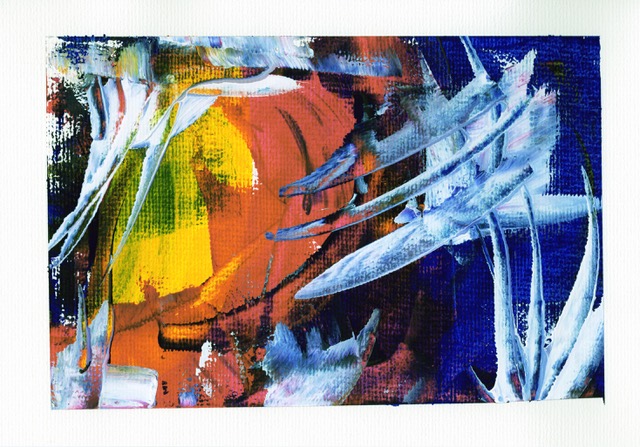
Artist Ellen June Wright is an American poet, photographer and painter with British and Caribbean roots. Her work has been published in Plume, Tar River, Missouri Review, Verse Daily and the North American Review. She’s a Cave Canem and Hurston/Wright alumna and has received Pushcart Prize and Best of the Net nominations.
 Gulf Stream Magazine