by Ellie Gomero
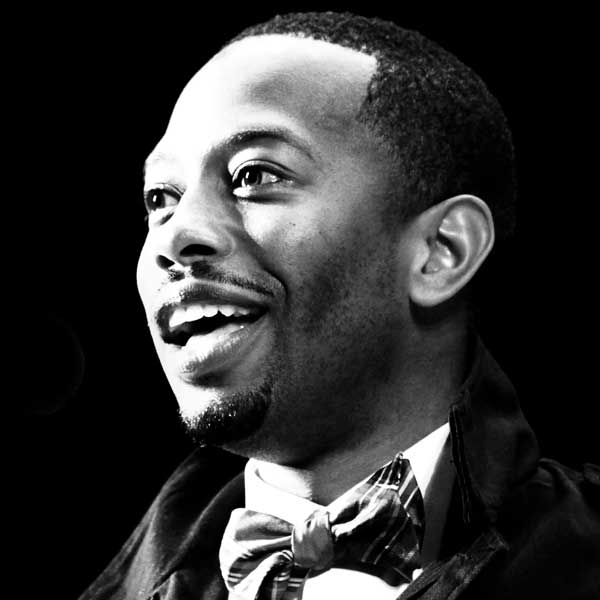
Rudy Francisco is one of the most recognizable names in Spoken Word Poetry. He was born, raised and still resides in San Diego, California. At the age of 21, Rudy completed his B.A in Psychology and decided to continue his education by pursuing a M.A in Organizational Studies. As an artist, Rudy Francisco is an amalgamation of social critique, introspection, honesty and humor. He uses personal narratives to discuss the politics of race, class, gender and religion while simultaneously pinpointing and reinforcing the interconnected nature of human existence. In the interview below he discusses his most recent book of poetry Excuse Me as I Kiss the Sky with Gulf Stream’s poetry editor Ellie Gomero at the 2023 Miami Book Fair.
Their conversation has been edited for concision and clarity.
_________________________________________________________________________
EG: One of the reasons that I was so excited to interview you was because I’ve been watching you perform since I was in middle school. I think I was 14 when I discovered your poetry and actually something that we have in common is actually that we both were introduced to spoken word through Def Jam
RF: Oh, yeah, that was a huge platform at that time.
EG: Yeah, so I had a 7th grade teacher who showed us Def Jam and I was enamored with spoken word and I started doing my own YouTube searches, found Button Poetry, and found you!
RF: Okay, okay. That’s awesome.
EG: So thank you for being such a vital presence in both the poetry world and in my life and like, thank you for agreeing to be here and to do this interview.
RF: Absolutely, my pleasure
EG: So, you’ve really chosen to stay connected to the slam and the performance space and as you know, prioritizing performance in poetry is not something that really happens as much in college spaces anymore. However, you carve out a whole section in this book for performance poetry or performance on the page. I just wanted to hear your thoughts on why you’ve chosen to stay so connected to that space and to performance?
RF: Because it was the community that brought me into poetry. Because I had read poetry before. I was introduced to poetry all throughout high school. But I never really gravitated towards it until I saw HBO Def Jam Poetry. I saw Shihan read a poem, and I was like, ‘Wow, you can do that with poetry?’ And I felt so much more connected to it also because around this time, we’re talking about like the early two thousands, in learning poetry, there weren’t a lot of people who looked like me, who sounded like I sound, who used words that I use. Like, a lot of these folks that I was introduced to throughout high school felt so disconnected from my actual life. And when I found spoken word, I was like, ‘Oh, there are people who are alive, that have experiences that are like mine, who use the vernacular that I use, who look like me.’ And that was really what made me gravitate towards the craft in the first place. Now, granted, since then, I’ve fallen in love with the page as well. And I’ve been introduced to a plethora of other styles, but spoken word is what got me here in the first place. And it’s such a beautiful community. All of my friends are pretty much people that I’ve performed with or competed against. It’s such a foundational part of who I am and how I got to where I am, so I will always be connected to it.
EG: That’s so beautiful. And what a perfect segue into my next question. Something that you do in this book – and it was obviously one of the first things you notice upon opening this book – is the way that you broke up this book by form. You even include definitions and a craft essay on why you chose to include those forms and it’s truly something I’ve never seen in a poetry book before. What was your intention with the way that you created this book?
RF: A good friend of mine, her name is Imani Cezanne, who I’ve known since she was in middle school. I used to be her camp counselor and I used to perform poems for the kids and then she got into it. Then she went on to become a woman of the world, Poetry Slam Champion two times over, and then she started to really get into more page work at the beginning of the pandemic as well. And you know, we’re close, we talk all the time, so she was telling me about it, and I’ve always seen the form, but to be honest, it took me a long time to consider myself a writer. I’ve always considered myself a performer who also writes. But I had been looking into some of the things happening with the way in which people organize poems in different forms. And Imani was really diving deep into it, so she was the one who actually brought me in and was like, ‘Hey, you should try some of this.’ And I thought, ‘Okay, like I’ll give it a shot.’At that time I was coaching our San Diego slam team and since it was the pandemic and we weren’t able to go to any tournaments, I thought, let’s turn this into like a bit of a residency where every week we would meet and then we would do workshops. Then I kind of started to run out of ideas.so I was like, ‘Why don’t we incorporate more page work?’ That was something that I was seeing a lot more spoken word artists do, is make that transition. I was like, ‘Well, I’m getting into the page. Why don’t I bring them in as well?’ So, I started to learn more. I would teach the workshop and I thought, ‘Wow, I really enjoy this.’
But I also felt like it was just this esoteric sort of thing, where you see form, you see contrapuntals, and nobody explains what that is. You see it and think, ‘That looks cool, but if somebody didn’t explain it to me, I wouldn’t even know how to read it.’ So there’s several forms that I feel are absolutely amazing and are great tools, but they’re so esoteric and often we’re not taking the time to explain them to people and I’ve always wondered why not bring more people into the fold? I think sometimes we get into our communities and just try to impress each other instead of saying let’s try to make this accessible. And that’s what I was really trying to do with this book. I was trying to take form and make it accessible to people. I thought, ‘Let me explain it. Let me tell you how I found it.’ And then it also offers almost like a challenge to the reader like saying hey, how about you try it out too, you know? That was like really my intention, is to make it something that was accessible to people.
EG: And I think you do an amazing job!
RF: Thank you.
EG: I really think that this is the kind of book that I would show to my students in a creative writing class, to introduce them to those forms. And I think you’re completely right when you talk about how poetry can feel very inaccessible, especially when you’re not introduced to spoken word and you’re just introduced to all the old white men who write. And I feel like when kids come into college, that’s all they’ve ever known, so they kind of hate poetry or they don’t understand it or they don’t feel like they can relate to it. But I think that giving them a book like yours would be an incredible introduction to say ‘Hey, there are real life living poets who sound like you and look like you and who are trying these forms and explaining them in ways that they can connect to.
RF: Absolutely, that was the main purpose of the book. And I feel like that’s something that I’ve set as a task for myself. How do we bridge the gap between poetry and regular people, how do we make it accessible? That’s the space that I often occupy.
EG: Especially because you work with a lot of younger people. I think that comes through in this, the teacher in you is there. And you also, speaking of, like, accessibility, all of your golden shovels in this book are from Drake’s songs.
RF: Yeah, yeah, yeah.
EG: Why was that?
RF: I really enjoy Drake. I like his work and I felt like it was a fun way to introduce Golden Shovels to people. Because outside of people who actually like to write, not a lot of people even know what a Golden Shovel is. I thought that was another level to the accessibility of it. It’s like, let me not only pick a quote, but let me pick a quote that most people can automatically identify with it in some way, shape, or form. Either they identify with it, or they’ve heard it, or they’re familiar with the person who said it. It has so many layers of accessibility that I was thought I could use this as a building block to explain something that most people have never heard of.
EG: I think that’s so cool. And I love that you chose to incorporate that musical element. Especially since I feel like it works on so many levels for you because you’re a performance poet and musicality has so much to do with slam and poetry.
RF: Thank you.
EG: So, my heart question of this of this interview, and something that I’ve always really really admired about your poetry, is something that you actually talk about in the beginning of the book, which is how you’re always finding a way back to joy in your work. Even when you’re talking about really hard subjects you always manage to bring it back to joy, and I think it’s really hard to do. I feel like when I was younger and I used to participate in slam, you felt like you had to like leave your blood on the stage and like expose all your traumas for points and for applause. But right now, in these times when the world kind of feels like it’s crumbling, how do you manage, especially as a person of color, as a black man, to kind of queer this narrative by saying that you don’t have to be the suffering artist, that you don’t have to be in turmoil all the time. And you manage to bring it back to joy and hope. How do you do that?
RF: You know, what I really try to do is I try to bring all of me into my work. Because of course, you know I’ve battled with depression. Of course, I’ve had some really traumatic things happen in my life, but that’s not my entire narrative. I also laugh a lot. I also hang out with my daughter. She tells me jokes. You know what I mean? There’s so many other experiences in my life other than trauma. And granted, I believe we have to talk about our trauma when that’s so necessary. Because writing has a healing power and property to it. I think that’s extremely important. But I also always urge people not to forget about the moments that make you feel joyful as well. Because that’s also a part of our experience. And it’s so important to also talk about that too. So that’s why I always try to bring it back to joy, because that’s such a huge part of my life as well. I consider myself to be a joyful person. I’m happy a lot of the time so it’s like, why not also incorporate that into my work, too?
EG: Yeah, and there’s definitely a balance to be struck, and I think especially with younger people, we tend to get caught up in this idea that we have to be so hyper lyrical, we feel like we have to be sad in our writing for it to feel impactful. And it’s always so incredible when authors are like, no, no, you don’t have to be sad, you can be joyous, you can find joy. And I love that you opened with odes.
RF: That was intentional. I love writing about things that are joyful, so I opened with the ode because I wanted to open with joy. It’s such an underutilized emotion in a lot of our art. So I was like, ‘okay, we’re gonna open this up with things that I really appreciate.’
EG: Your “Ode to Plantains” was amazing. And I’m right there with you. I still can smell my grandmother’s kitchen when she’s cooking plantains and all the sounds and the smells of it all. And that is a form of heaven. I do believe.
RF: Absolutely.
EG: You’re a new dad, right?
RF: Yeah.
EG: How has that changed your writing process, being a father?
RF: It hasn’t changed the process much, but it has shaped the way in which I think about things. For a long time, I was writing just for myself. And recently I had a parent-teacher conference with my daughter’s teacher. This was Wednesday, actually. And we’re talking, and he goes, ‘You know what? Your daughter is so proud of you.. She talks about you all the time. She said my dad is like this really amazing writer, and he travels all around the world performing. She said, you should get his book. He has a copy I can give you.’
EG: Oh my god, that’s so cute.
RF: That was just so huge for me because in the event that at some point I’m not here, my daughter can still feel connected to me in some way, shape, or form through my work. And that has made me so much more intentional about how I approach the craft and the things that I write about. I’m always thinking that she’s going to read this someday. She’s going to see this someday.
EG: That’s so beautiful. Do you feel like your next book or the next things that you’re working on is gonna be kind of for your daughter?
RF: I think it will be. I think everything I write from now on will be sort of shaped by that in some way, shape, or form. I would love to write a children’s book someday. That’s something that I’ve been in talks about just seeing what that can look like. But I think from here on out being a father is such a cornerstone of who I am, it’s gonna be a part of, really, everything that I do. Even when I’m talking about other things, like, I’m still talking about those things through the lens of being a father.
EG: I think that’s so beautiful, especially because I know in college spaces – and this is maybe something that’s more towards women – but we tend to get told that having a child is detrimental to a career and that’s not the truth. Or at least it doesn’t have to be the truth. I love when you mention your daughter in your poetry and I think that this book especially has that level of inclusion. I think your daughter is gonna look at it one day and be like ‘Look – my dad is a teacher!’ I think it’s so cool to hear that she’s so proud of you. I’m glad that she knows her dad is cool.
RF: Right? Because for a long time I don’t think she thought I was cool, you know what I mean? Cause like her mom is her favorite and it’s not even close.
EG: So, what would be your advice to young poets, young poets of color, or just people looking to explore the poetry scene, and the poetry world?
RF: I think my biggest piece of advice, especially for people who are interested in writing, comes from a friend of mine, he’s like my brother, Javon Johnson, he said that sounding like someone else is a good place to start, but it’s a terrible place to end. I know sometimes young writers are either part of two camps. They either go, ‘I don’t want to sound like anybody,’ so they don’t study the craft. Or they get so entrenched in sounding like someone else. And my biggest piece of advice is study the craft and if you sound like somebody, if you sound like your favorite poet, that’s fine. But also figure out ways in which you can incorporate your own nuances. When I first got started, I wanted to sound like Javon Johnson and Shihan, those are my two biggest inspirations. I wanted to sound just like them, but I also had to take a step back and go, ‘Okay, so what are the words that I use when I describe something like this? What are my own mannerisms? How can I take parts of what they do that I really enjoy, but still make it my own?’
Also, take risks. I can’t urge that enough. I think sometimes when I coach younger people, they don’t want to make mistakes. They want to get it right the first time. Sometimes getting it wrong and understanding why it’s wrong and learning is a critical part of the process. So don’t be afraid to make mistakes. Just make your mistakes. That’s fine. We’re all gonna do that. It’s how we learn. It’s how we learn everything. When we learn how to walk, we see other people do it, then we try it out, we fall a couple times, then eventually we figure it out. And I think that’s the same thing with poetry. We see it, we wanna try it, and we’re gonna fall, we’re gonna stumble, we’re gonna get some things wrong. But the process is what’s really important and where you come out after that is what makes you who you are in the world. So study the craft. Don’t be afraid to make mistakes. Give yourself some grace. There is going to be a learning curve. There are going to be stumbles and falls, but anything that you stick with is going to end up panning out at some point in time.
EG: Yeah, I think exposure and emulation and editing are the big three E’s of writing.
RF: Yeah, editing is so important. I come across people who don’t edit and I’m like, you gotta edit. You gotta be able to fix things. You gotta edit.
EG: Yeah, and I think that’s another big misconception, especially with young writers, where they feel like they’re just going to sit down and grind it out and it’s going to work and the truth is that’s not how this works.
RF: Yeah. Because one thing I tell young writers a lot of times is that poems will finish themselves when they’re ready to be finished. I remember there were a couple poems that I was working on and I was stuck, right? But I realized I needed to have a conversation with my father. So, after I had that conversation with my father, it was like, ‘Oh, got it. That’s the poem.’ So sometimes we just have to go out and live our lives and then the poems will find us.
EG: I agree. That’s so integral to the process, especially if you’re feeling really stuck, that moment when you realize that there’s something holding you back emotionally that you have to get done before you can take it to the page.
RF: Definitely. And letting that happen is so much more of a fruitful process than just wanting it done. Because if you just want it done, then it’ll be finished, but it might not be what you could have written if you were patient.
EG: Especially when you have deadlines or you’re in a program or you’re doing a slam competition, they just want to get it done.
RF: Yeah, sometimes working with deadlines can be a little challenging because inspiration often doesn’t work like that.
EG: As somebody who’s written and gotten so many books published and in the world. How do you balance those deadlines?
RF: I try to set myself flexible deadlines, where I set myself up with a range by say, picking a month, where it’s like, okay, I want it done sometime this month. When I’m writing for myself, I don’t give myself deadlines. A poem can take two weeks, it can also take six years. Doesn’t matter because it’s for me. But when I’m doing contract work or when I do have to get something done at a particular sort of time, I do try to give myself flexible deadlines. That way, I’m still allowing inspiration to do the work that it needs to do, but also meeting my deadlines. It’s challenging finding that balance because often inspiration comes when it comes.
EG: How long did it take you to write this book?
RF: About two years. Yeah. I started working on this book the day after I’ll Fly Away was published. I think it takes my mind off of how well the book is doing. Because it’s easier to sort of watch and check in all the time if you’re not busy. You’ll think ‘What are the sales looking like? What are people saying about the book?’ So I try to just disconnect as soon as the book is finished and start on the next one. That way I’m not so hyper focused on what the current book is doing in the world.
EG: The part that I guess gets me anxious is thinking about how my family and friends are going to read this and like the public is gonna read this and sometimes we write about vulnerable things, you know? Like your poem that just came out on Button Poetry’s Youtube channel, about a week or so ago, it’s so vulnerable. It’s so raw. How do you handle the fact that so many people are going to see that?
RF: I think that’s one of the benefits of disconnecting as well. Sometimes I even forget that I exist on the internet. Once it’s up, I just like to go off and I do other things and I focus my attention elsewhere because it’s easy to get caught up in that. And I’ve always tried to avoid doing that because it can be consuming, like, spending all day just thinking about what are people saying, what are people saying, what are people saying. I’ve avoided that as much as possible.
EG: What’s your favorite way to disconnect? What’s your favorite thing to do?
RF: A couple of things. I love taking my daughter to the indoor playground. She just like runs around and it’s an awesome time. I also play basketball a couple of days out of the week. I do try to play for at least two days out of the week. Sometimes I play three. That’s one of my favorite things. I’ve played basketball almost my entire life. I love just being out on the court because when you’re out there, it’s like almost nothing else in the world matters. Because you’re just in this zone, and you’re just free for a little while, you know? So yeah, playing basketball, hanging out with my daughter, I watch TV every now and then, too. I kinda like to zone out and put something on that I don’t really have to think about. Those are my favorite ways to disconnect.
EG: Oh yeah, brain dead TV is great.
RF: It really is.
EG: And speaking of, you were on
an episode of The Bachelorette. How was that? How did that even happen?
RF: Yeah, so what’s really amazing
is that so many different kinds of people love poetry. The entire gamut, any
profession you could think of, I know somebody in that profession that really
enjoys poetry. Actors, hip hop artists, what have you. What’s really
awesome is that two of the producers of The Bachelorette had been watching my
work since they were in college. So, they reached out to me and they were like ‘Hey
you know, we have this idea for this episode would you be interested?’ And I
said sure because I’m always trying to challenge myself to put poetry in
different places. They called me, we discussed the idea and then they were like
‘okay, we’re going to go ahead and shoot, are you available XYZ days?’ And I
was like, yeah, let’s do it. You know so many of these opportunities have come
from people who work in these different industries and just really love poetry.
Like I was on Jimmy Fallon because one of the writers for the Jimmy Fallon show
had been watching my work also since he was in college as well. So yeah, I just
come across all these people who consume spoken word, who are in all these
other places, and they bring me into them.
EG: I think that’s the amazing
thing about the internet and spoken word is that it shows this whole other
side, this whole other accessibility to poetry that you just don’t get always
on the page or just in schools, or in the school systems. People are not always
teaching relevant and alive poet. And I was very lucky to have a teacher who
made it a point to say ‘Hey, I want to show you guys that there are people who
are alive and breathing that are doing work that you guys can also do.’
RF: Exactly. Exactly. That’s so important.
EG: I don’t want to keep you too long because I know that you have your events to go to.
But I just want to say again thank you so much for being here, for meeting with me, I so appreciate your time.
RF: Oh, you’re welcome. Thank you for having me!
_______________________________________________________________________
Rudy Francisco seeks to create work that promotes healthy dialogue, discourse and social change. Furthermore, Rudy has made conscious efforts to cultivate young poets and expose the youth to the genre of Spoken Word Poetry via coaching, workshops and performances at preparatory schools and community centers. Rudy has also received admiration from institutions of higher education. He has conducted guest lectures and performances at countless colleges and universities across the nation.
Ellie Gomero is a poet, a feral woman, and a sad girl at heart. She is currently studying at Florida International University, to receive her master’s degree in Poetry. Her poems have been published in Rust + Moth, The Orange Island Arts Review, and have received awards / recognition from The Academy of American Poets, Fred Shaw Poetry Contest, Bluapple Poetry Foundation, and Scholastics.
 Gulf Stream Magazine